Low Blood Pressure Gets Dismissed. In Seniors, It Shouldn't.
Low blood pressure gets waved off as the safe number, but in seniors it drives dizziness and falls. What causes it, and the readings worth a call.
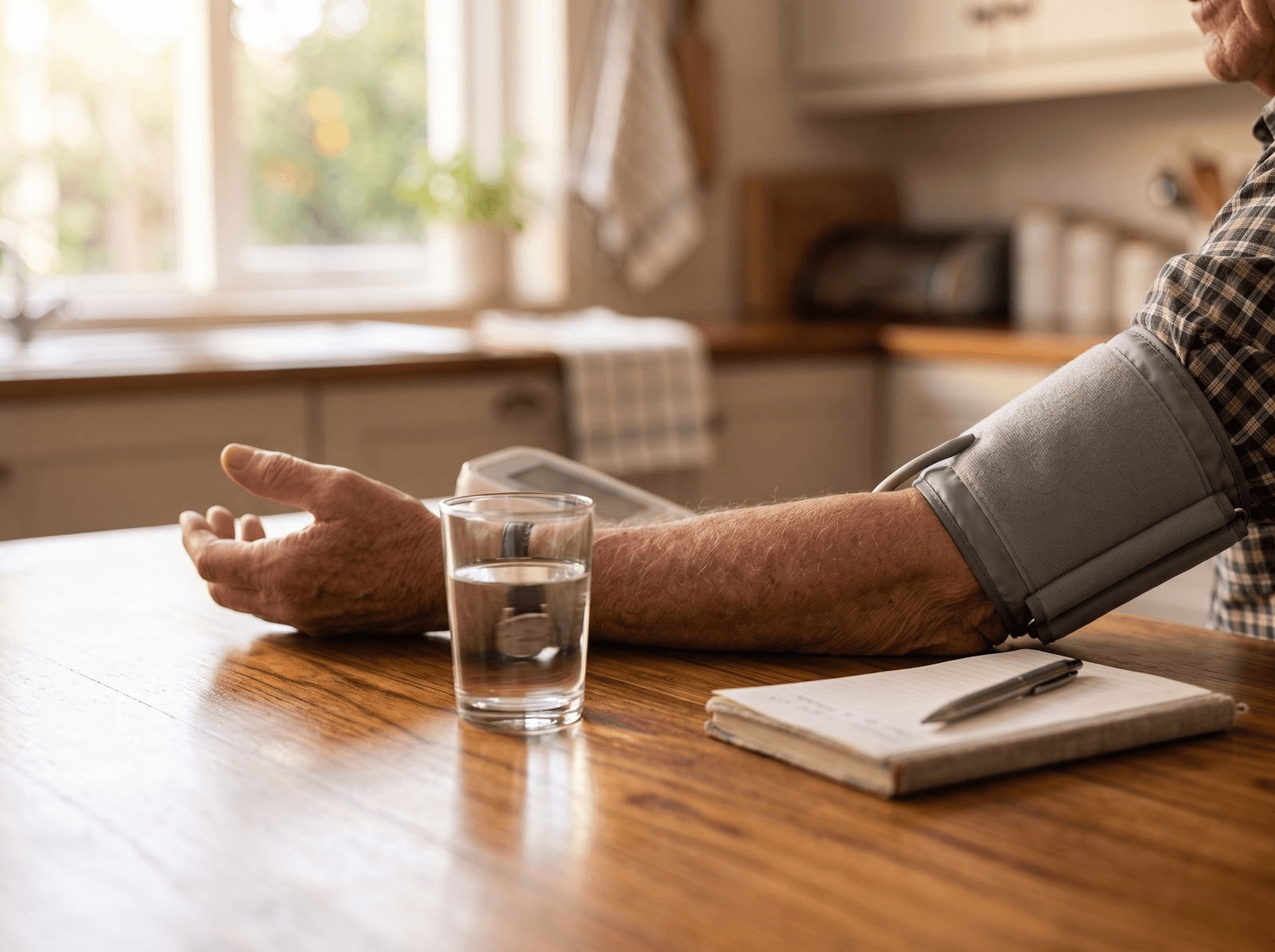
Here is a number that tends to get the wrong reaction: 92 over 58. Flash it on a home monitor and most families exhale. After years of being told that high blood pressure is the enemy, a low reading looks like a win, proof that the pills are working and the heart is behaving. The cuff is quietly congratulated and the number is forgotten.
In an older adult, that reflex can be exactly backward. Blood pressure that runs too low, or that drops too suddenly, is one of the more overlooked hazards of later life, precisely because we have all been trained to worry about the opposite. It rarely announces itself. It shows up as a wobble on the way to the bathroom, a gray moment after lunch, an unexplained fall that gets blamed on a rug. This is a look at the number nobody warns seniors about: how low is actually too low, why it happens, and which readings are worth a phone call. None of it replaces a doctor's judgment, particularly for anyone taking medication for the heart or blood pressure.
Why the Top Number Gets All the Attention
For decades, public-health messaging has pointed in one direction. High blood pressure is common, it is largely silent, and left unchecked it drives strokes, heart attacks, and kidney disease, so campaigns taught a generation to watch the top number and keep it down. That message worked, and it saved lives. It also left a blind spot.
The trouble is that "lower is better" has limits, especially as the body ages. A pressure that keeps blood moving comfortably at seventy can be too little at eighty-five, when arteries are stiffer and the reflexes that fine-tune circulation have slowed. The same diligence that once kept a dangerous number from climbing can, years later, hold it down past the point of usefulness, and because nobody is looking for that, the drop goes unnoticed until someone hits the floor.
How Low Is Actually Too Low
Clinically, low blood pressure, or hypotension, usually means a reading under 90 for the top number or 60 for the bottom. But that line is far less useful in an older adult than it sounds. Plenty of seniors sit at 100 over 65 all day and feel perfectly fine; a naturally low, steady pressure with no symptoms is often nothing to treat. The Mayo Clinic makes the point plainly: for many people, chronically low readings cause no problems at all, and what matters is whether the pressure is producing symptoms.
So the number to watch is not a fixed line but a fall. What causes trouble in older adults is pressure that drops far and fast, leaving the brain briefly short of blood, whether that happens on standing, after eating, or from a medication set a notch too strong. And here is the part that catches families off guard: the drop does not have to feel like anything. Researchers have found that a large share of older adults with significant pressure drops report no lightheadedness at all, yet still suffer the falls. The absence of a spinning head is not the same as safety.
The Drop That Comes With Standing Up
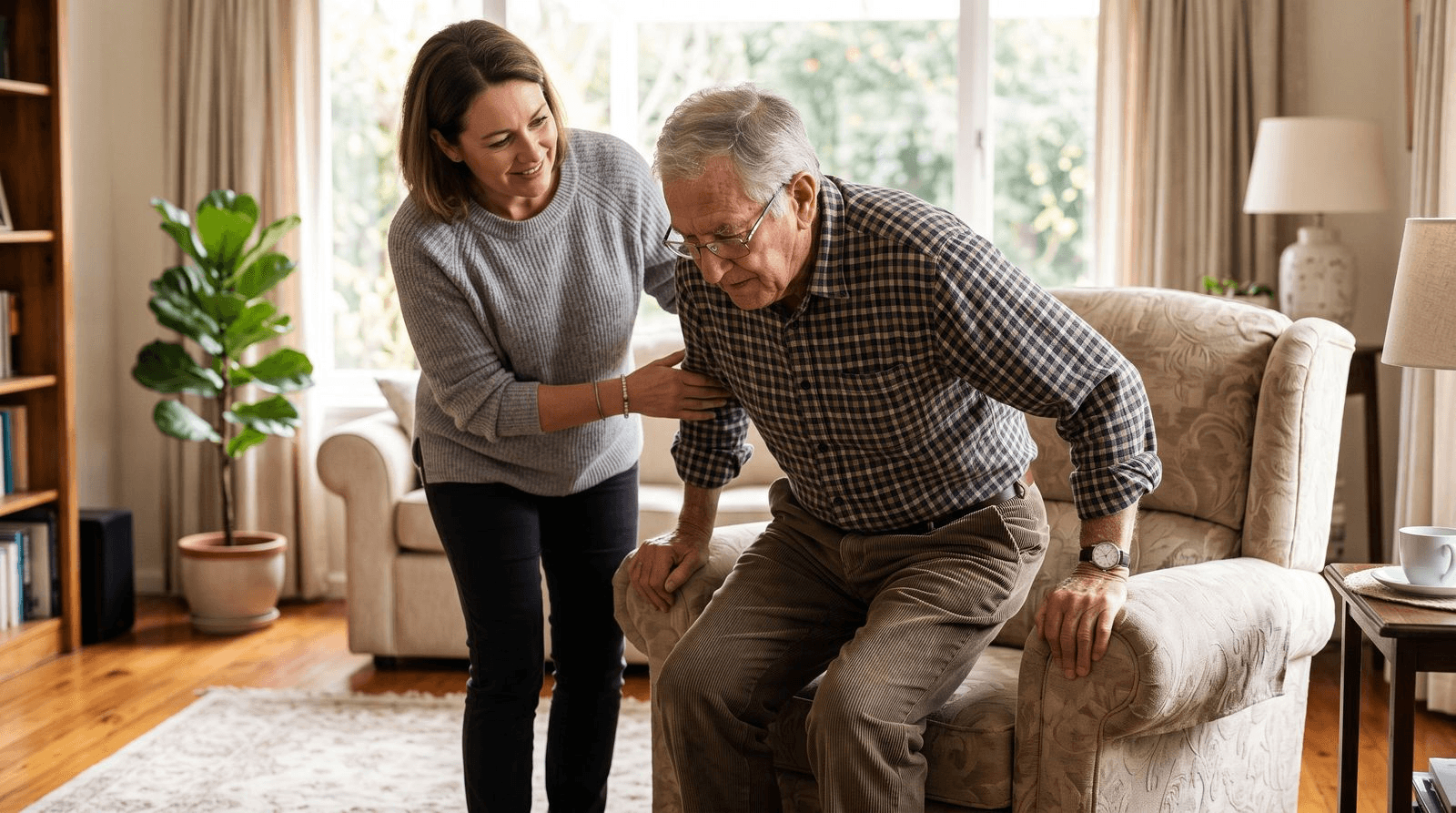
The most familiar version has a clinical name and a very ordinary feel: orthostatic hypotension, the wave of dizziness that arrives on the way up from a chair or a bed. When you stand, gravity pulls a pint or so of blood toward your legs, and a healthy body answers in seconds by tightening blood vessels and nudging the heart faster to keep pressure level. With age that answer comes slower. Doctors mark it when the top number falls at least 20 points, or the bottom at least 10, within three minutes of standing.
It is common and it climbs with age, affecting roughly one in five adults over seventy-five and a larger share of frail seniors. The usual accomplices are dehydration, long stretches of sitting or bed rest, hot weather, and, above all, medications. The fix is mostly gentle and mechanical: rise in stages, sit on the edge of the bed before standing, pump the ankles a few times first, and keep fluids up through the day. When the dizziness is frequent or comes with near-faints, it belongs in front of a doctor, who can sort it from the other reasons an older adult might feel unsteady. Our guide to dizziness in older adults walks through how the standing-up kind is told apart from the rest.
The One That Arrives After Lunch
There is a second, quieter pattern that almost nobody expects, and it is worth knowing precisely because it is so easily missed. Postprandial hypotension is a blood-pressure drop in the hour or two after a meal. Digestion pulls a rush of blood toward the gut, and in a younger body the heart and vessels compensate; in some older adults that compensation falls short, and pressure sags. The result is a spell of lightheadedness, drowsiness, or an unexplained fall shortly after eating, often after breakfast or a large lunch.
It is common in the geriatric years and more so in people with Parkinson's or diabetes, yet it is rarely on a family's radar, so the after-lunch faint gets chalked up to tiredness. As the MSD Manual notes, the practical remedies are simple: drink a glass of water before eating, trade three big meals for several smaller ones, go easier on refined carbohydrates, and sit or lie down for a while after eating rather than rushing off. If someone in your family reliably wilts after meals, that timing is a clue worth handing to their doctor.
When the Prescription Is the Cause
More often than any single illness, the reason an older adult's pressure runs low is sitting in the pill organizer. Blood-pressure medicines and diuretics do their job, sometimes a little too well as the years pass and doses that once fit no longer do. Other drugs lower pressure as a side effect, including some prostate medications, certain Parkinson's treatments, nitrates for the heart, and a number of antidepressants. Take several of these together, add a hot day and a light appetite, and a comfortable pressure can slide into a risky one.
This is why a low reading in a senior on several medications is not a cue to quietly cut a pill, but a cue to sit down with a doctor or pharmacist and go through the whole list. A dose that was right at seventy may be too aggressive at eighty-five, and only a prescriber can safely dial it back. That kind of regular, deliberate review is the heart of good medication management, and it is often where the whole problem quietly resolves.
The Real Danger Is the Floor, Not the Number
Strip away the vocabulary and the stakes of low blood pressure in an older adult come down to one thing: falling. A pressure that drops on standing or after a meal can produce a faint, a stagger, or a moment of gray vision, and in a body with thin bones and slow reflexes, that instant is enough to break a hip or strike a head on the way down. The number on the cuff is not what hurts anyone; the edge of the bathtub is.
That reframing matters because it changes what you do about it. The American Heart Association has reported that dropping blood pressure on standing tracks with frailty and falls in older people, which means a low reading is not just a fact to log but an early warning to act on. Treating it well is as much about the home as the heart: clearing the path from bed to bathroom, adding a night light and a grab bar, and making sure someone rising in the small hours is not doing it fast and alone.

What Steadies It, Day to Day
Most of what keeps low blood pressure in check is unglamorous and free. Keep fluids steady through the day, since even mild dehydration deepens every drop. Rise in stages rather than springing up, and pause at the edge of the bed. Eat smaller, more frequent meals if pressure sags after eating, and be careful with alcohol and long hot baths, both of which widen blood vessels and lower pressure further. Compression stockings help some people, and a doctor may suggest tilting the head of the bed up slightly for those whose pressure swings between low on standing and high while lying flat. Salt and stimulants are not do-it-yourself fixes; they belong to the doctor's toolbox, not the kitchen counter.
A great deal of this is really about steady attention, and that is where a daily helping hand earns its place. A caregiver assisting with bathing, dressing, and getting around is often the first to notice that a parent goes gray standing up, wilts after lunch, or has had two near-falls in a week, the kind of pattern that never fits into a fifteen-minute doctor's visit but tells the whole story. That same person makes sure water is within reach, meals are spaced sensibly, and the walk to the bathroom is clear and lit. It is quiet, ordinary work, and it is one reason families across Monmouth County lean on an in-home caregiver less for anything dramatic than for the steady eyes that catch a drop before it becomes a fall.
The Reading Worth a Same-Day Call
Most low readings in a comfortable, symptom-free senior need nothing but a note to mention at the next appointment. A handful do not. Call the doctor, or seek urgent care, when low pressure arrives suddenly or keeps dropping, when it comes with confusion, chest pain, shortness of breath, a fast or pounding heartbeat, or cold, clammy, pale skin, or when it causes an actual faint. Those can be the signs of dehydration, infection, blood loss, or a heart problem rather than a simple postural dip, and they are not the moment to wait and watch.
Short of that, the goal is not a higher number for its own sake but a steadier one the person tolerates well. Bring the pattern to the doctor, not just a single reading: when the drops happen, what came before them, which medications are in the mix. Low blood pressure in an older adult is rarely a crisis and often an easy fix, but only once someone stops congratulating the low number and starts asking what it is doing to the person attached to the cuff.
Frequently Asked Questions
What is considered low blood pressure in an elderly person?
Doctors generally call a reading below 90 systolic (the top number) or 60 diastolic (the bottom number) low blood pressure, or hypotension. But in older adults a single low reading matters far less than the pattern around it. Many seniors live comfortably at 100/65 with no trouble at all, while another person feels faint at 105/70 because their pressure drops sharply when they stand or after they eat. What counts is not one number on the cuff but whether the pressure falls far and fast enough to leave the brain briefly short of blood, and whether that is producing symptoms like dizziness, unsteadiness, or falls.
What causes low blood pressure in the elderly?
The most common causes are medications, dehydration, and the body's fading ability to regulate pressure with age. Blood-pressure pills, diuretics (water pills), some Parkinson's and prostate drugs, and certain antidepressants can all push pressure too low, especially when several are taken together. Not drinking enough shrinks blood volume and makes the drops worse. Two age-related patterns are especially common: orthostatic hypotension, a drop when standing up, and postprandial hypotension, a drop in the hour or two after a meal. Heart conditions, infections, blood loss, and thyroid or adrenal problems can also lower pressure and are worth ruling out.
Why does my elderly parent get dizzy when standing up?
That is the classic sign of orthostatic hypotension, a blood-pressure drop that happens within a few minutes of rising from lying or sitting. Normally the body squeezes blood vessels and speeds the heart to keep pressure steady as you stand, but that reflex slows with age, and medications, dehydration, and long spells of sitting or bed rest blunt it further. The result is a wave of lightheadedness, blurred vision, or unsteadiness as the brain is briefly under-supplied. It usually eases within a minute of standing still. Rising slowly, sitting on the edge of the bed first, and staying well hydrated all help, and any new or worsening pattern is worth a mention to the doctor.
Is low blood pressure dangerous for seniors?
It can be, mostly because of what it leads to rather than the number itself. The biggest risk is falling: a sudden drop can cause a faint or a stagger, and in an older adult a fall can mean a broken hip or a head injury. Low blood pressure that comes on suddenly, or that comes with confusion, chest pain, shortness of breath, cold or clammy skin, or fainting, can also signal a serious problem such as dehydration, infection, internal bleeding, or a heart issue, and needs prompt medical attention. Chronic mildly low pressure with no symptoms, by contrast, is often harmless and needs no treatment.
How can you raise low blood pressure in an older adult at home?
Start with the simple, safe measures: drink enough water through the day, stand up slowly in stages, avoid long hot baths and standing still for long periods, and eat smaller, more frequent meals if pressure sags after eating. Compression stockings and raising the head of the bed slightly can help some people, and a doctor may review whether a blood-pressure or other medication is set too aggressively. Do not add extra salt or stop any prescription on your own; both can backfire. The goal is a steady pattern the person tolerates well, which almost always comes from adjusting fluids, timing, and medications with a doctor rather than chasing a higher number.