Is It Just Worry, or Is It Anxiety?
Anxiety in older adults often hides behind physical complaints. How to spot the signs, ease it at night, and know when worry needs a doctor's help.
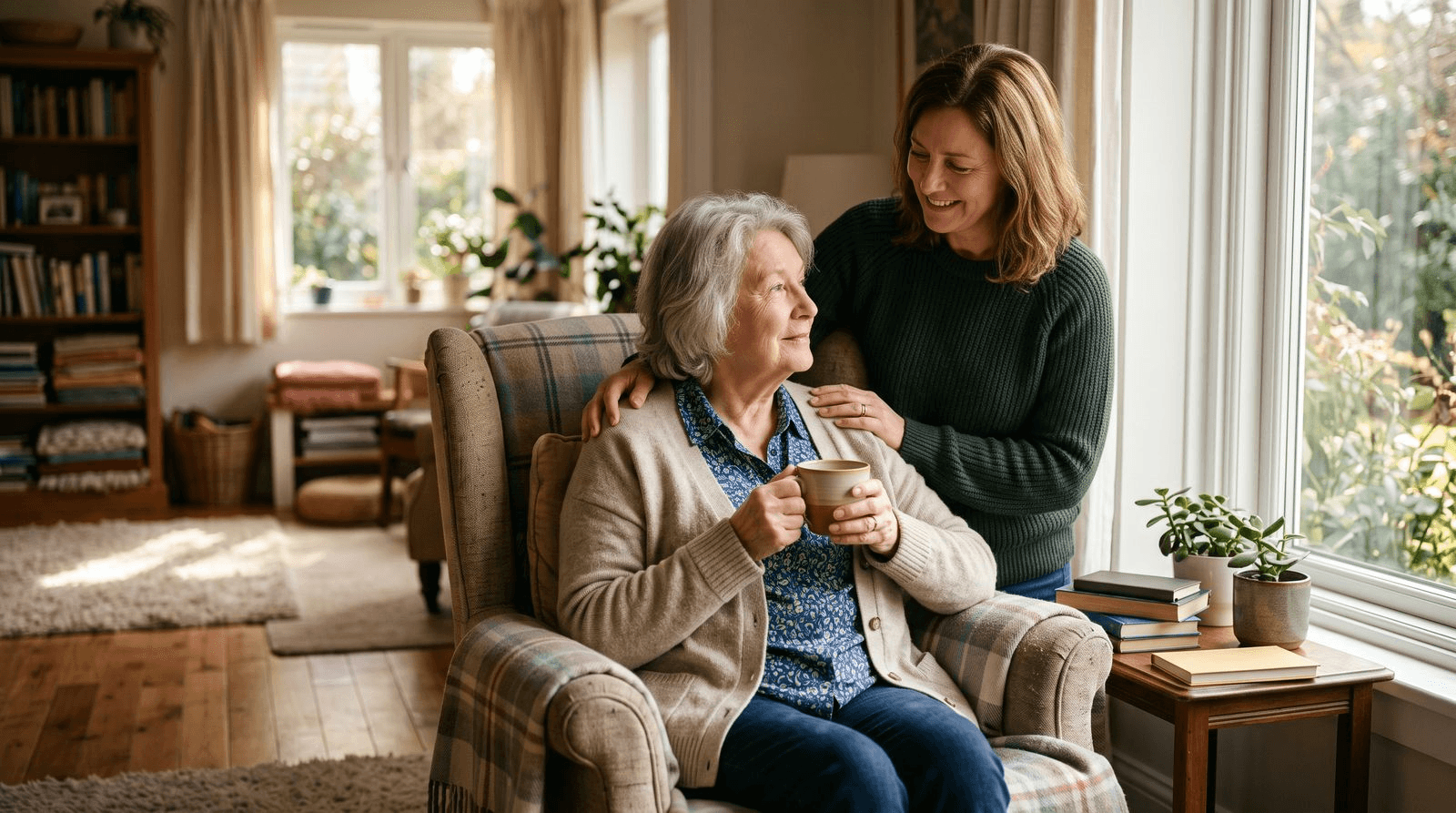
Ask an older adult if they feel anxious and the answer is often no. Ask how they are sleeping, whether their stomach has been off, or if their heart sometimes races for no reason, and a different picture appears. Anxiety in later life tends to speak through the body rather than the mind, which is a large part of why it slips past families and doctors alike.
It is not a small problem hiding in plain sight. It is a common one. And the good news, easy to lose in the worry itself, is that anxiety in older adults responds unusually well to the right help. This is a plain-language guide to what it looks like, why it happens, why it seems to peak after dark, how to tell it apart from a medical issue, and what genuinely eases it.
How Common Is Anxiety in Later Life?
More common than most people assume. A 2025 systematic review pooling studies from around the world put the prevalence of anxiety symptoms among older adults at roughly 28 percent, or more than one in four. Rates climb higher still among older people living with chronic illness, in hospitals, or in care settings.
Yet anxiety is one of the most underdiagnosed conditions in geriatric care. Part of the reason is a quiet myth that worry is just part of getting older, something to be endured rather than treated. It is not. Persistent anxiety is no more a normal feature of aging than persistent pain is, and like pain, it is worth taking seriously and worth addressing.
Why Does It Look Like a Physical Problem?
This is the single most important thing for families to understand. Older adults are more likely to notice and report the physical side of anxiety, the pounding heart, the tight chest, the dizziness, the churning gut, and less likely to name the psychological side, the dread, the racing thoughts, the fear. So the same anxiety that a younger person might describe as feeling on edge shows up in an older adult as a string of physical complaints that never quite add up.
Watch for the pattern rather than any single symptom:
- In the body: a racing or pounding heart, shortness of breath, dizziness, headaches, muscle tension, an upset stomach, trembling, sweating, or a constant sense of being keyed up.
- In sleep and focus: trouble falling or staying asleep, waking at odd hours, difficulty concentrating, or forgetfulness that looks like memory trouble but tracks with worry.
- In behavior: new irritability, repeatedly seeking reassurance, calling family more often, or avoiding outings, driving, or stairs that used to be routine.
A fear of falling deserves its own mention. It is one of the most common late-life anxieties, and it can quietly shrink a life, keeping someone from walking, socializing, or leaving the house, which weakens the body and, cruelly, makes an actual fall more likely. Naming it as anxiety rather than mere caution is often the first step to loosening its grip.
What Makes Older Adults More Prone to It?
Anxiety rarely appears out of nowhere. Later life stacks up a particular set of triggers, and often more than one is at work:
- Health worries. A new diagnosis, a hospital stay, or a chronic condition like heart disease, diabetes, or breathing trouble can plant a steady fear about what comes next.
- Loss of independence. Giving up driving, needing help with daily tasks, or leaving a longtime home can shake a person's sense of control.
- Grief and loss. The death of a spouse, siblings, or friends brings both sorrow and a sharpened awareness of one's own vulnerability.
- Isolation and sensory change. Loneliness feeds anxiety, and vision or hearing loss can make the world feel less predictable and safe, pulling people further inward.
- Medications and substances. Some drugs, and too much caffeine or alcohol, can produce or worsen anxiety as a side effect.
None of these are character flaws or signs of weakness. They are understandable responses to real losses and real stresses, which is precisely why they respond to real support.
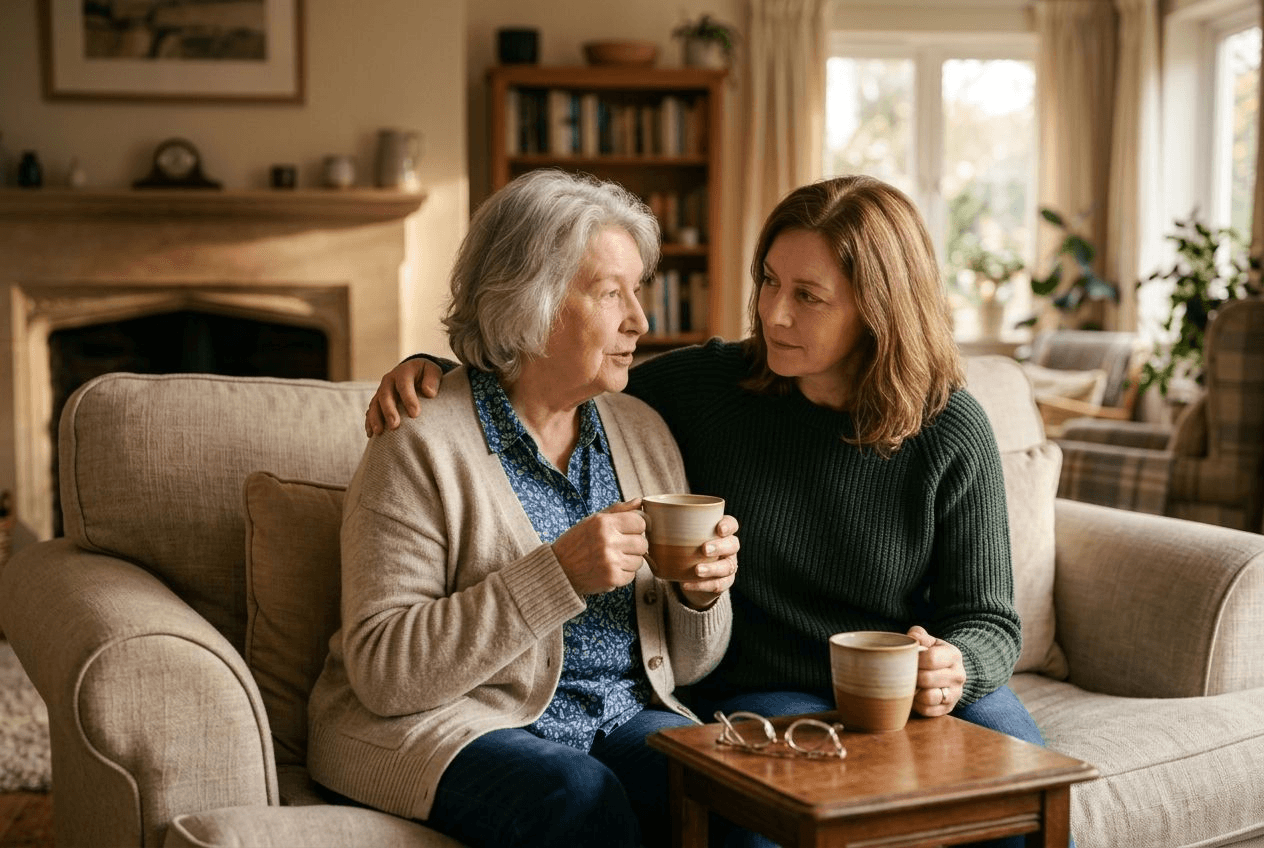
Why Does It Get Worse at Night?
Many families notice the same thing: the day is manageable, but as evening comes on, the worry swells. There are good reasons for it. Daytime keeps the mind busy and in company; nightfall removes both. The house empties and quiets, the light drops, and the mind is suddenly free to circle over health, money, and safety with nothing to interrupt it.
Physical factors compound it. Daytime medications wear off, aches feel louder when lying still, and a dark trip to the bathroom can unsettle an already anxious mind. Anxiety and poor sleep also reinforce each other, so a restless night and a worried mind trade fuel back and forth. In someone living with dementia, this evening restlessness can overlap with anxiety and is often called sundowning; our guide to managing sundowning in dementia covers that pattern in depth.
A calming wind-down routine helps more than almost anything: the same soothing sequence each night, dimmed screens, a warm non-caffeinated drink, soft music, a nightlight to the bathroom. For older adults who dread being alone after dark, a steady presence at bedtime is its own medicine, which is one reason families arrange overnight care when nighttime anxiety takes hold.
Is It Anxiety, or Something Medical?
Because anxiety wears a physical disguise, the reverse question matters just as much: is a physical problem masquerading as anxiety? In older adults, new or sudden anxious feelings can be driven by something medical, and that possibility should be checked before anything is assumed.
An overactive thyroid, an irregular heart rhythm, low blood sugar, dehydration, an infection, and a long list of medications can all produce symptoms that feel exactly like anxiety. So can the wearing-off between doses of certain drugs. This is why a doctor's visit is the right first move when anxiety arrives suddenly or looks new, especially if it comes with chest pain, breathlessness, confusion, or a marked change from how someone usually is. Sorting out a medical cause is not a detour; it is often the fastest route to relief.
What Helps in the Moment?
When anxiety spikes, a few simple, in-the-moment tools can bring the body back down. They are worth practicing when calm so they are ready when needed:
- Slow the breath. Breathe in gently for a count of four, out for six, letting the exhale stretch longer than the inhale. A slow breath is a direct signal to the nervous system that the danger has passed.
- Ground the senses. Name five things you can see, four you can hear, three you can touch. It pulls a racing mind out of the future and back into the room.
- Warm and soften. A warm drink, a blanket, a hand to hold. Physical comfort and gentle touch genuinely lower the body's alarm.
- Stay steady and unhurried. A calm, patient voice from someone nearby, without rushing or arguing with the fear, helps more than reassurance repeated a dozen times.
For a person who is often alone, the simple fact of reliable company is one of the strongest calming forces there is. Regular companion care, a familiar person who visits, shares a cup of tea, and takes the edge off an empty afternoon, addresses one of anxiety's biggest drivers directly.
What Actually Eases It Over Time?
In-the-moment tools calm a wave; lasting relief comes from steadier habits and, when needed, professional treatment. The encouraging truth is that late-life anxiety is very treatable.
- Talk therapy. Cognitive behavioral therapy, a structured approach that reshapes anxious thinking and behavior, works well in older adults and carries none of the risks of medication. The National Institute of Mental Health lists it among the first-line treatments for anxiety.
- Movement most days. A daily walk, gentle chair exercises, tai chi, or time in the garden burns off nervous energy and steadies mood.
- Sleep, caffeine, and alcohol. Protecting sleep and cutting back on coffee and alcohol, all of which stir up anxiety, often makes a real and quick difference.
- Connection and routine. Predictable days and regular human contact lower the uncertainty and isolation that feed worry.
- Medication, carefully. When a doctor prescribes medicine, certain antidepressants are usually preferred over sedatives, since the calming drugs called benzodiazepines raise the risk of falls and confusion in older adults.
Much of this is the fabric of ordinary daily support, not a clinical program. A caregiver who keeps the day predictable, encourages a short walk, prepares a calming evening, and simply stays present is doing real work against anxiety. Across our Bergen County, New Jersey service area and beyond, that steadying rhythm, company, routine, and a calm hand, is woven into the ordinary shape of a visit.
When Should a Doctor Be Involved?
Some anxiety can be eased at home, but several signs mean it is time to bring in a doctor rather than manage alone. Reach out when anxiety is new or has come on suddenly; when it disrupts sleep, appetite, or daily life; when it arrives with chest pain, breathlessness, or a racing heart that needs checking; or when it appears alongside memory changes or a low, flat mood. Any thought of self-harm or hopelessness is an urgent reason to seek help the same day.
Raising it is never an overreaction. Because anxiety in later life is so often missed, families are frequently the ones who notice the pattern first and start the conversation that leads to relief. A doctor can rule out a medical cause, connect a person with therapy, and weigh whether medication has a role.
Worry, Made Smaller
Anxiety in an older adult is common, it is often disguised as a physical problem, and it is genuinely treatable. Those three facts together carry a hopeful message: the racing heart at the kitchen table, the dread that arrives at dusk, the reluctance to leave the house, none of it is simply the price of a long life. It is something that can be understood, checked, and eased.
The path is rarely a single fix. It is a doctor's visit to rule out the physical, a steadier routine, a little more movement and daylight, less caffeine, and, above all, less time spent alone with the worry. Small, unremarkable, repeated, those are the things that make worry smaller, and let a calmer kind of day return.
This article is for general education and is not medical advice. Anxiety can have medical causes and can occur alongside depression; talk with a doctor about new, sudden, or severe anxiety, and seek help the same day for any thoughts of self-harm.
Sources: Health Science Reports (2025) - Global prevalence of anxiety symptoms and its associated factors in older adults; Factors associated with anxiety and fear of falling in older adults: a rapid systematic review of reviews; Clinical Practice Guidelines for Geriatric Anxiety Disorders; National Institute of Mental Health - Anxiety Disorders.
Frequently Asked Questions
What are the symptoms of anxiety in the elderly?
In older adults, anxiety often speaks through the body more than the mind. Common signs include a racing or pounding heart, shortness of breath, dizziness, muscle tension, headaches, an upset or churning stomach, trembling, sweating, and restlessness. Just as telling are the behavioral changes: trouble falling or staying asleep, difficulty concentrating, irritability, clinginess or repeated reassurance-seeking, and avoiding activities or places that once felt fine. Many older people do not describe themselves as worried at all, which is exactly why anxiety is so often missed. A fear of falling that keeps someone from walking, or a wave of dread that arrives every evening, can both be anxiety wearing a physical disguise.
How do you treat severe anxiety in the elderly?
Severe anxiety in an older adult should be evaluated by a doctor, both to rule out a medical cause and to build a plan. The most effective non-drug treatment is cognitive behavioral therapy, a structured talk therapy that works well in later life and has no risk of falls or sedation. It is usually paired with lifestyle measures: a steady daily routine, gentle exercise, better sleep habits, less caffeine and alcohol, relaxation and slow-breathing techniques, and more social contact. When medication is needed, doctors generally favor certain antidepressants over sedatives, because the sedative class known as benzodiazepines raises the risk of falls, confusion, and dependence in older adults. Treatment is often most effective when therapy, lifestyle, and steady support are combined rather than relying on a pill alone.
Why is anxiety often worse at night for older adults?
Evenings strip away the distractions that keep worry at bay during the day. The house goes quiet, company leaves, the light fades, and the mind has room to circle over health, money, and safety. Older adults with anxiety also tend to have more disrupted sleep, so a restless night and an anxious mind feed each other. Physical factors play a part too, including the wearing-off of daytime medications, discomfort or pain that intensifies when lying still, and needing the bathroom in the dark. For someone with dementia, evening agitation can overlap with anxiety and is sometimes called sundowning. A calming wind-down routine, a lit path to the bathroom, and a reassuring presence at bedtime all help settle nighttime anxiety.
What are natural remedies for anxiety in the elderly?
Several everyday, non-medication measures genuinely help. A predictable daily routine lowers the uncertainty that feeds anxiety. Gentle movement like walking, chair exercises, tai chi, or gardening burns off nervous energy and lifts mood. Slow, paced breathing and simple relaxation practices calm the body in minutes. Cutting back on caffeine and alcohol, both of which worsen anxiety and disrupt sleep, often makes a noticeable difference. Sunlight, good sleep habits, and time spent with other people all steady the nervous system. These approaches are safe, but they work best alongside a doctor's guidance rather than in place of it, especially if anxiety is severe or new.
When should an older adult see a doctor about anxiety?
See a doctor when anxiety is new or has come on suddenly, when it interferes with sleep, eating, or daily activities, when it comes with chest pain, breathlessness, or a racing heart that needs to be checked, or when it appears alongside memory changes or low mood. Sudden anxiety in an older adult is especially worth a prompt visit, because a thyroid problem, a heart rhythm, an infection, or a medication can cause it. Any thoughts of self-harm or hopelessness are an urgent reason to seek help the same day. Because anxiety in later life is both common and treatable, it is always worth raising with a doctor rather than accepting it as a normal part of aging.