Bedsores: The Four Stages, and How to Stop Them Early
Bedsores start reversible and turn dangerous fast. Learn the four pressure ulcer stages, the spots to check, and the daily routine that prevents them.
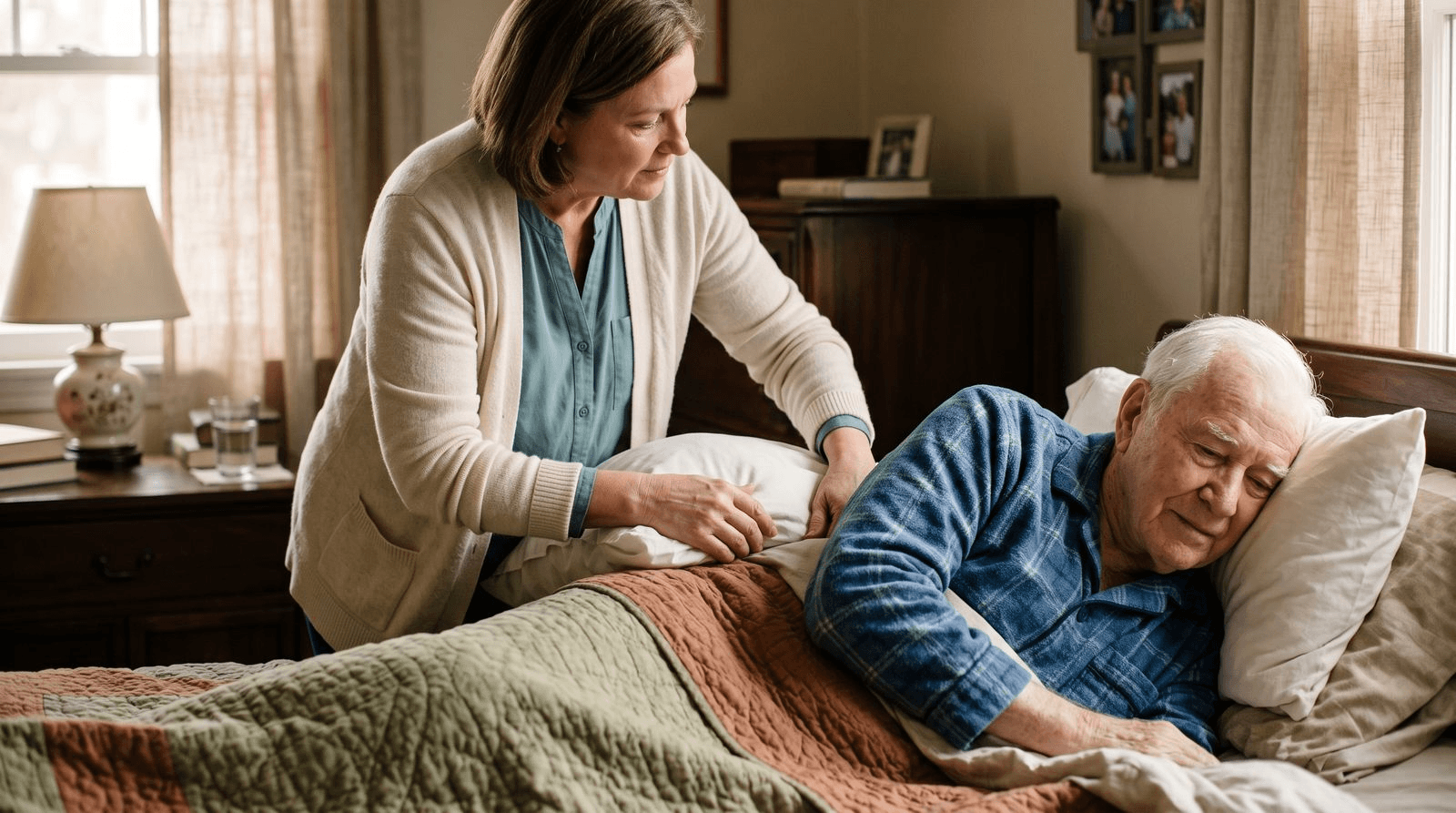
A pressure sore does not start as a wound. It starts as a quiet arithmetic problem: weight, pressed on one spot, multiplied by time. Skin and the tissue beneath it need a steady supply of blood, and blood needs open vessels to reach it. When a bony part of the body, a heel, a hip, the tailbone, rests against a mattress or a chair without relief, that weight squeezes the tiny vessels closed. Starved of oxygen, the tissue begins to die from the inside, often before the surface shows a thing.
That is the unsettling truth families should carry into this: the damage can begin within a couple of hours of unrelieved pressure, and by the time skin visibly breaks, the injury has usually been building underneath for a while. The upside is just as important. Pressure injuries are largely preventable, and the earliest stage is almost entirely reversible if someone catches it and acts. This guide walks through how a sore forms, where to look, what each of the four stages means, and, most usefully, the daily routine that keeps nearly all of them from ever happening.
How a Pressure Sore Actually Forms
Two forces do the harm. The first is pressure: the direct, perpendicular squeeze of body weight onto skin over a bony prominence, which compresses the small blood vessels until they close and the tissue starves. The second is shear, a sideways, dragging force. It happens when someone slides down in a bed that is propped up, or is pulled rather than lifted across the sheets. Shear stretches and tears the deeper tissue and kinks the blood vessels running through it. Add friction and a little moisture from sweat or incontinence, and the skin's defenses drop further.
This is why a person who cannot easily shift their own weight is the one at risk. Someone recovering from a stroke, living with advanced dementia, bedbound after surgery, or simply too weak to reposition without help does not make the dozens of small, unconscious adjustments the rest of us make every few minutes. Poor sensation means they may not feel the ache that would normally make them move. Thin skin, poor nutrition, dehydration, and reduced blood flow all stack the odds. The common thread is stillness, and stillness is the thing a caregiver can change.
The Places to Check First
A pressure sore almost always shows up where bone sits close to the surface. If you are doing a daily skin check, and anyone at risk should have one, these are the spots that deserve the most attention. Look at them in good light, and gently feel for warmth, hardness, or a boggy softness that does not match the skin around it.
- Lying in bed: the tailbone and lower back, the heels, the hips, the shoulder blades, the elbows, the back of the head, and the ears.
- Sitting in a chair or wheelchair: the tailbone, the sitting bones, the shoulder blades, and the backs of the arms and legs where they press against the seat.
The heels and the tailbone are the two that catch families off guard most often, because they are easy to overlook under blankets and clothing. Peel back the covers and look at the heels directly, every day. A good daily foot check covers the skin on the heel and the ankle, not just the toenails, precisely because a heel can go from red to broken faster than almost anywhere else on the body.
The Four Stages, One by One
Clinicians grade pressure injuries using a scale set by the National Pressure Injury Advisory Panel. The numbers describe how deep the damage goes, not how long it has been there, and that distinction matters: a sore can jump from a red patch to an open wound quickly when pressure keeps up. Here is what each stage looks like in plain terms.
| Stage | What the skin looks like | How deep the damage goes |
|---|---|---|
| Stage 1 | Intact skin with a patch of redness that does not turn white when you press it; may feel warmer, cooler, firmer, or more tender than nearby skin | Surface only; skin is not broken |
| Stage 2 | A shallow open sore with a pink or red base, or an intact or burst blister | Partial-thickness: the top layers of skin are lost |
| Stage 3 | A deeper, crater-like wound; the fat beneath the skin is visible | Full-thickness skin loss into the fatty layer; muscle and bone are not exposed |
| Stage 4 | A deep wound that may show or let you feel muscle, tendon, or bone | Full-thickness loss of skin and the tissue beneath it |
Two more categories sit outside the numbers, and both mean get professional help. An unstageable injury is a deep wound whose true bottom cannot be seen because it is covered by dead tissue, either soft yellow or gray slough or a dry, dark scab called eschar. Under that covering it is really a Stage 3 or 4; you just cannot measure it yet. A deep tissue injury looks different from all the others: a persistent patch of maroon or purple on skin that is still unbroken, sometimes with a blood-filled blister, signaling serious damage brewing below. Neither of these is a home project.
Stage One Is Your Window
Almost everything good that can happen with a pressure sore happens at Stage 1. The skin is still whole. The tissue is stressed but not destroyed. This is the moment the whole problem is still reversible, and it hinges on one test you can do with a fingertip.
Press gently on the reddened area and lift your finger. Healthy skin briefly turns pale, then flushes back, because blood is flowing normally. In a Stage 1 injury, the redness stays; it does not blanch. On darker skin tones the patch may not read as red at all but as a purplish or darker area that feels warmer, cooler, firmer, or more tender than the skin around it, so touch matters as much as sight. When you find one, the response is immediate and simple: get the weight off that spot entirely, keep the area clean and dry, reposition on a strict schedule, and watch to be sure the mark is shrinking over the next day, not spreading. If it is not improving, or the skin breaks, call the doctor or nurse.
Past Stage One, It Becomes a Nurse's Wound
The line to hold in your mind is this: once the skin is broken, at Stage 2 and everything beyond it, you are looking at a medical wound, and it needs medical eyes. An open pressure sore can become infected, and a deep one can turn serious quickly, so a nurse or physician should assess any broken skin, decide on the right dressing, and set a treatment plan. Wound care, cleaning and dressing an open sore, removing dead tissue, managing infection, is skilled clinical work. It is not something a family member or a non-medical caregiver should attempt at home.
That boundary is worth being blunt about, because the internet is full of home remedies. Do not apply random ointments to an open sore, do not massage a reddened or broken area in hopes of restoring circulation, and never pick at or peel off a dry, stable scab on a heel; intact eschar there is acting as the body's own protective cover. What a non-medical caregiver does around a diagnosed wound is real and valuable, offloading pressure, keeping the surrounding skin clean and dry, watching for changes, and following the nurse's instructions, but the wound itself belongs to the clinicians.
The Daily Routine That Prevents Almost All of Them
Here is the part that actually moves the needle. Prevention is not complicated, and it does not require medical training. It requires consistency. A steady daily routine built from a handful of habits prevents the large majority of pressure injuries before they start.
- Reposition on a schedule. Change position roughly every two hours in bed and every fifteen minutes to an hour in a chair. Set a timer if you need to. Even small shifts of weight count.
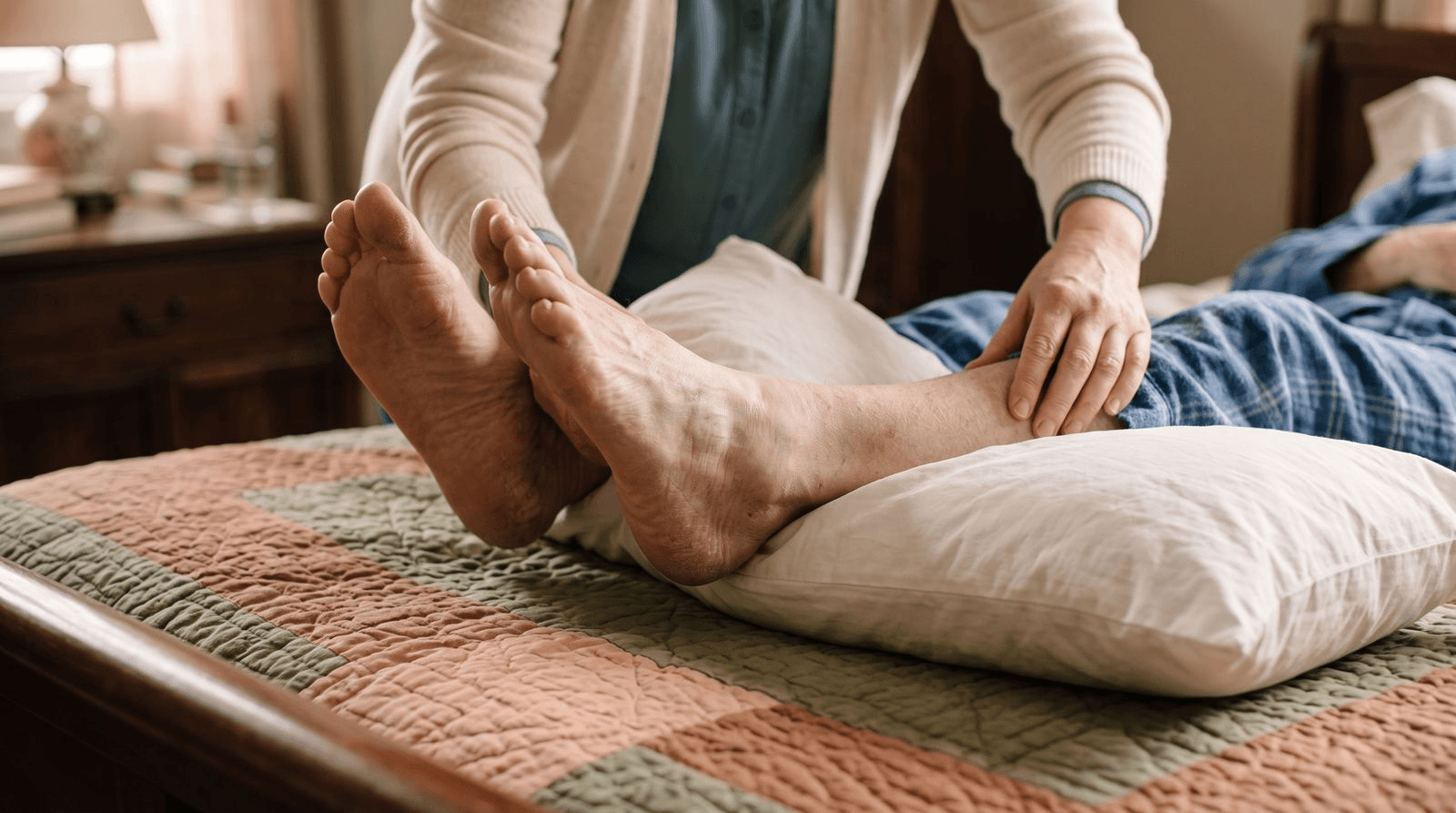
- Float the heels. Place a pillow lengthwise under the calves so the heels hang free of the mattress entirely. Heels have almost no padding and are one of the most common sites for a sore.
- Use the right surface. A pressure-redistributing foam or air mattress and a good chair cushion spread weight out. Skip the old donut-shaped rings; they concentrate pressure around the edges instead of relieving it.
- Mind the angle. Keep the head of the bed as low as is safe and comfortable. Sitting propped up for long stretches slides the body down and grinds shear force into the tailbone.
- Keep skin clean and dry. Manage incontinence promptly, since trapped moisture raises the risk of skin breakdown several times over. Use a barrier cream to protect against sweat, urine, and stool, and a gentle water-based moisturizer on dry skin, but do not rub or massage bony areas.
- Feed the tissue. Skin holds together on protein, calories, and fluid. Poor nutrition and dehydration in an older adult both make the skin fragile and slow to heal, so regular meals with enough protein and steady hydration are part of prevention, not a side note.
- Lift, do not drag. When helping someone move up in bed or into a chair, lift or use a draw sheet rather than pulling them across the surface, which shears the skin.
- Inspect the skin every day. Make the head-to-toe check a fixed part of the day, at a bath or a change, so a Stage 1 mark is found while it is still just a mark.
A Second Set of Eyes on the Skin
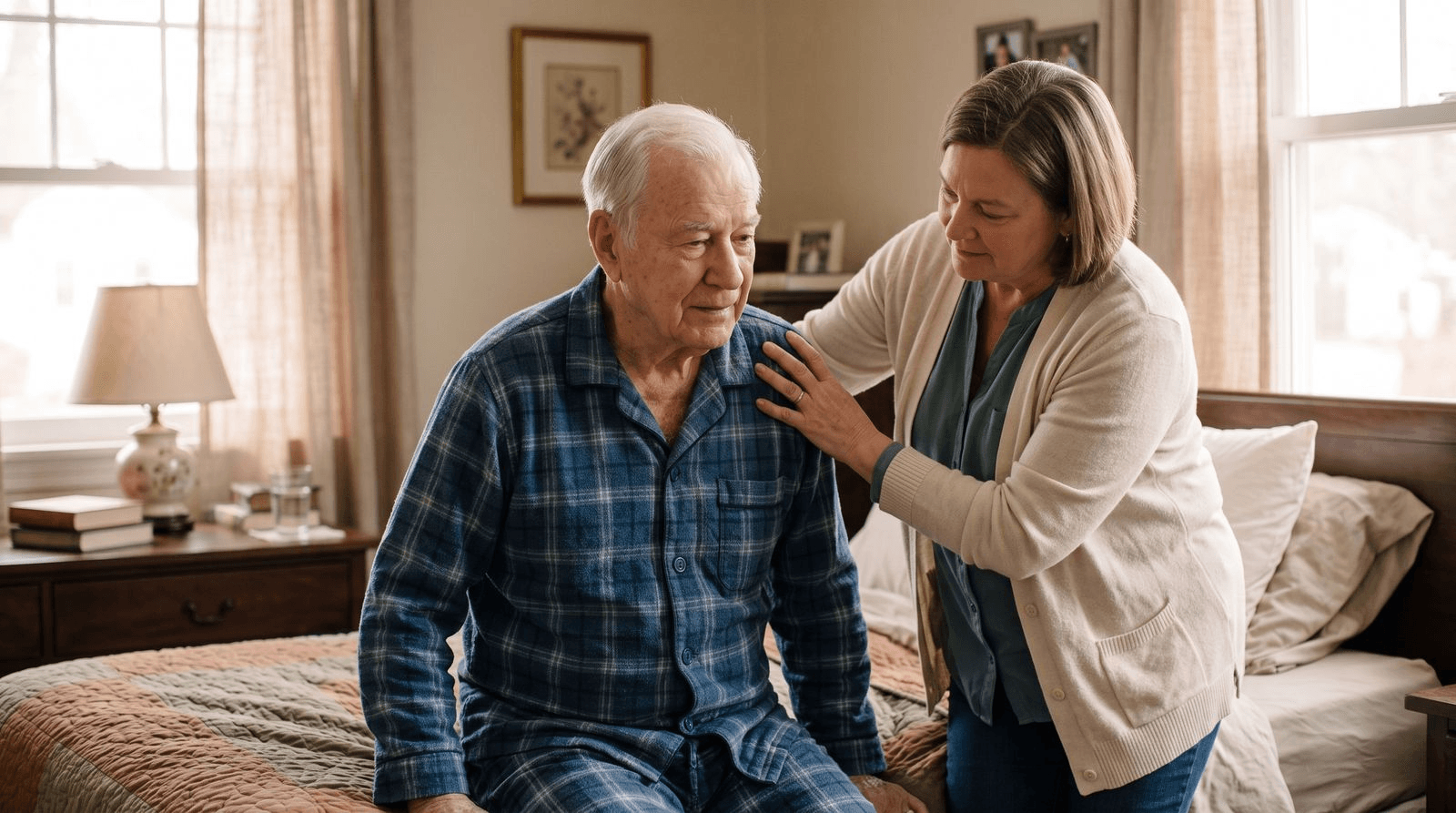
Every item on that list is ordinary, and that is exactly why pressure sores are so often a problem of attention rather than difficulty. The routine works only if someone actually does it, every two hours, every day, including the overnight stretch when a sore can quietly deepen while everyone sleeps. For a family stretched thin, or living an hour away, holding that line without help is genuinely hard.
This is where a trained non-medical caregiver earns their keep. Repositioning on schedule, floating the heels, managing incontinence, keeping meals and fluids on track, and, above all, running a real daily skin check are squarely within the work of personal care, and for someone with limited movement, mobility care is built around the safe transfers and repositioning that keep pressure from ever settling in one place. When the risk is highest, for a person who is bedbound or needs turning through the night, around-the-clock home care keeps the two-hour clock running even at 3 a.m. Families across Middlesex County, New Jersey and Sarasota, Florida lean on that steadiness to catch trouble at the red-patch stage instead of the open-wound one. A registered nurse still oversees the care plan; the caregiver provides the consistent, watchful presence that prevention depends on.
Skin Breaks Last, Not First
The most useful thing to remember about pressure sores is that the skin gives way last, not first. The damage builds underneath, quietly, over hours, which means the window to stop it opens well before there is anything dramatic to see. A non-blanching red patch is not a small wound; it is the body's early warning, handed to whoever is paying attention.
So the whole task comes down to noticing and moving: look at the skin every day, especially the heels and the tailbone, and never let a person at risk sit or lie in one position for hours untouched. Caught at Stage 1, almost every pressure injury heals. Missed, it can become one of the hardest wounds in all of medicine to close. If you are caring for someone who cannot easily move on their own and you want steady hands to help hold that routine, our home care team would be glad to talk through what a safe daily plan looks like for them.
Frequently Asked Questions
What are the four stages of a pressure ulcer?
Stage 1 is intact skin with a patch of redness that does not blanch, or turn white, when you press it; the skin is not broken. Stage 2 is partial-thickness skin loss, a shallow open sore or an intact or ruptured blister, with a pink or red wound bed. Stage 3 is full-thickness skin loss that reaches into the fatty layer beneath, often looking like a deeper crater, though muscle and bone are not exposed. Stage 4 is full-thickness loss of skin and tissue with visible or directly felt muscle, tendon, ligament, cartilage, or bone. Two additional categories sit outside the numbers: an unstageable injury is covered by dead tissue that hides its true depth, and a deep tissue injury shows as persistent maroon or purple discoloration of intact skin. These definitions come from the National Pressure Injury Advisory Panel and are the standard used across hospitals and nursing homes.
Can a stage 1 pressure sore heal on its own?
Usually, yes, if you relieve the pressure quickly. A Stage 1 injury means the skin is still intact; the tissue underneath is stressed but has not broken down. Take the weight off that spot, keep it clean and dry, reposition on a schedule, and check that the redness is fading rather than spreading, and the area typically recovers within days. What it should not do is stay under continued pressure. The same spot pressed on hour after hour is how a reversible red patch turns into an open Stage 2 wound. So a Stage 1 sore is best understood as an alarm: the body telling you exactly where to act before real damage sets in.
How often should you reposition someone to prevent bedsores?
The long-standing guideline is to change position roughly every two hours for someone lying in bed and much more often, as frequently as every fifteen minutes to an hour, for someone sitting in a chair, since sitting concentrates pressure on the tailbone. The 2019 international prevention guideline notes that a two- or three-hour schedule can work for most people, provided they are also on a proper pressure-redistributing mattress or cushion, and that the interval should be tailored to the individual's skin, mobility, and support surface. The practical point for families is simpler than the research: nobody at risk should sit or lie in one position for hours untouched. Even small shifts of weight help.
What is an unstageable pressure injury?
An unstageable pressure injury is a full-thickness wound whose true depth cannot be determined because the base is covered by dead tissue, either slough (a soft yellow, tan, or gray material) or eschar (a dry, dark, leathery scab). Under that covering the wound is really a Stage 3 or Stage 4; you simply cannot see how deep until the dead tissue is removed, which is a job for a wound-care professional. One important exception: stable, dry, intact eschar on the heel acts as the body's natural cover and should not be picked at or removed at home. Any wound like this needs medical assessment, not a home remedy.
Where do bedsores form most often?
Pressure sores form over bony areas where there is little padding between bone and skin. For someone spending long stretches in bed, the highest-risk spots are the tailbone and lower back, the heels, the hips, the shoulder blades, the elbows, the back of the head, and the ears. For someone in a wheelchair or recliner, the tailbone, the sitting bones, the shoulder blades, and the backs of the arms and legs where they rest against the chair take the most pressure. These are the places to inspect first and most carefully during a daily skin check, because they are where trouble almost always begins.