Adult Day Care, From Drop-Off to Pick-Up
What is adult day care really like? An hour-by-hour look inside a typical center: the two kinds of programs, who thrives there, and how to choose one.
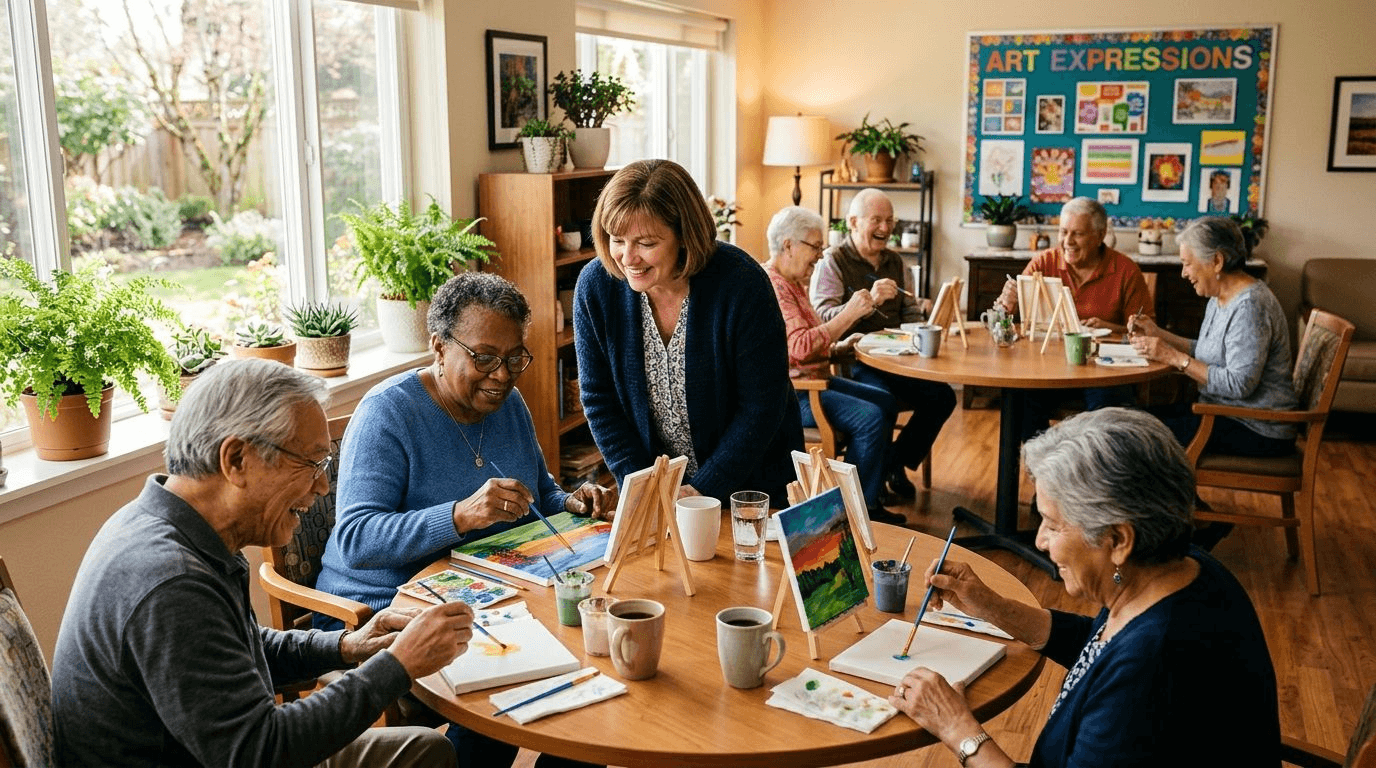
The name is the worst thing about it. "Day care" lands hard on the ear of a seventy-eight-year-old who raised four children, and plenty of families never get past the phrase to the thing itself. Which is a shame, because the thing itself is one of the most useful and least understood options in senior care: a place where an older adult spends the middle of the day in good company, with a hot lunch, real programming, and trained staff, then comes home to their own bed.
It is also far more common than most families realize. There are thousands of these programs across the country, and on any given day about 200,000 adults are at one, according to the CDC's National Center for Health Statistics. So set the name aside and look at the day. Here is what actually happens between drop-off and pick-up, and how to tell whether it belongs in your family's week.
Two Kinds of Centers, One Idea
Before the doors open, one distinction is worth knowing, because it decides which centers should be on your list. The social model is built around activities, meals, companionship, and light help with personal needs. The medical model, usually called adult day health care, layers clinical services on top: nursing oversight, medication administration, health monitoring, and often physical, occupational, or speech therapy. Many communities also have a third flavor, dementia-specific programs, which run inside either model with a secured entrance and activities designed for memory loss.
The population these centers serve is broader than the stereotype. Federal survey data show most participants need help with several activities of daily living, a large share live with dementia, and about four in ten are younger adults with disabilities rather than seniors. In other words, this is not a coffee klatch. It is structured care that happens to be delivered in the most social possible setting. With that in mind, walk through the day.
8:40 a.m. — Drop-Off
Mornings at a day center look like a small, unhurried school arrival. Some participants are dropped off by a son or daughter on the way to work; others come by the center's own van, since many programs offer door-to-door transportation. A staff member greets each person by name, and this is the first thing worth watching on a tour: whether the greeting is generic or whether staff know that Frank takes his coffee black and wants the sports page first.
The handoff matters as much as the greeting. A good center asks the family how the night went, whether medications changed, whether anything is off. That thirty-second exchange is the seam between home care and day care, and centers that take it seriously tend to take everything else seriously too.
9:30 a.m. — Movement First
Most programs open with the body: chair exercises, gentle stretching, a walking group for those who are steady on their feet. It is scheduled early on purpose, when energy is highest and joints need waking up. From there the morning typically moves into something for the mind, such as a current-events circle, trivia, word games, or a craft project that will resurface at every holiday for the rest of the year.
None of this is filler. Group activity is the mechanism by which a day program does its quiet work against isolation, and Harvard Health notes that for older people with long-term health conditions, regular structured activity and time with others can measurably improve quality of life and well-being.
11:00 a.m. — The Work You Don't See
While the activity room hums, the clinical side of a medical-model center runs in parallel. A nurse checks blood pressure and blood sugar, gives scheduled medications, and looks in on anyone whose family flagged a rough night. Participants with therapy orders are pulled out for physical, occupational, or speech therapy sessions and returned to the group afterward. Staff also help discreetly with toileting, grooming, and other personal needs.
This is the part of the day that surprises families most. Behind the bingo is a level of health attention that would be hard to arrange piecemeal, and it is why a day at a good center is not "watching," it is care.

12:00 p.m. — Lunch, the Main Event
Lunch is the social anchor of the day, and centers know it. The meal is hot, usually planned with a dietitian, and adapted for diabetic, low-sodium, and soft-texture diets. But the food is only half the point. For an older adult who eats most meals alone, a table with conversation changes what a meal is. Appetite tends to follow company, which is one reason families often notice a parent eating better on program days.
1:30 p.m. — Music, Art, and a Rest
Afternoons run at a gentler pace. This is when the music circle happens, or the visiting performer, or the painting class, and when dementia-specific programs lean on reminiscence work: old songs, photographs, the kinds of memory that outlast recent ones. Those who want quiet get it, in a recliner corner or a rest room set aside for napping. The rhythm, active morning, social midday, softer afternoon, is deliberate, matched to how energy actually moves through an older adult's day.
For participants with dementia there is a second benefit hiding in this structure: a full, engaging day out of the house tends to make for calmer evenings and better sleep at night, which families managing late-day restlessness learn to prize.
3:00 p.m. — Meanwhile, at Home
The other half of this story is happening somewhere else entirely. The daughter who did drop-off is at work, present for a full day without her phone face-up on the desk. The husband who has not had an afternoon to himself in a year is asleep on the couch, or fishing, or simply in an empty house. Day programs are respite in the most literal sense, and clinicians take that half seriously: caregiver relief is a stated purpose of these centers, not a side effect. Research on caregiver strain is blunt about why it matters, and our guide to caregiver burnout covers the warning signs. Rest that arrives on a schedule, several hours at a time, several days a week, is the kind that actually prevents it.
4:45 p.m. — Pick-Up, and the Ride Home
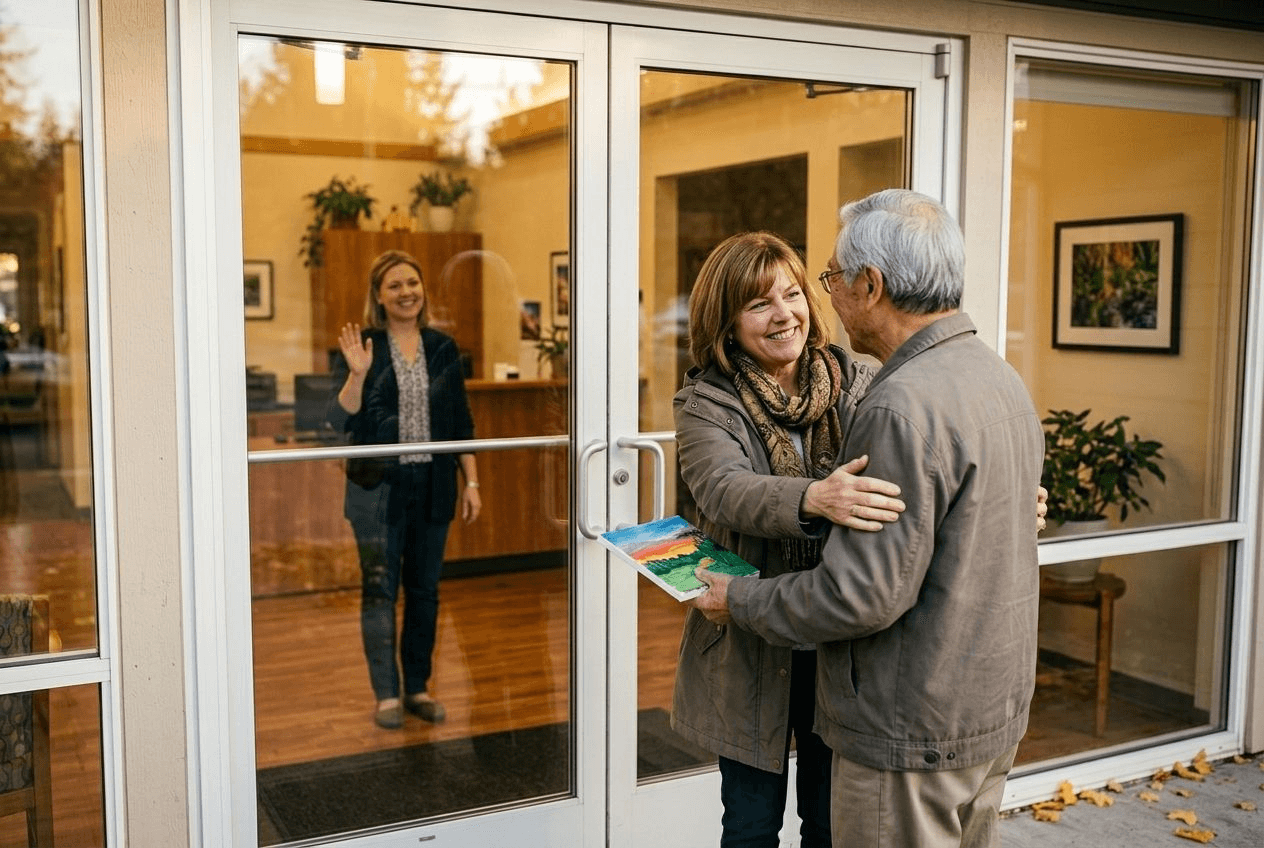
The day closes the way it opened: a handoff. Staff tell the family how lunch went, what the nurse noticed, whether Mom seemed like herself. Then home, to dinner in her own kitchen and her own bed, which is the whole design. A day center borrows the middle of the day and returns the person to their own life every evening.
One honest note about beginnings: the first weeks are often rocky. Memory care clinicians commonly tell families that a new participant may resist or hang back for a few weeks before the routine takes hold and the center becomes "my club" or "my volunteer job." The families who get the benefit are usually the ones who committed to consistent days and rode out the adjustment.
Who Thrives There, and Who Doesn't
The best-fit participant is someone who should not spend long days alone, because of memory loss, health conditions, unsteadiness, or plain isolation, but who does not need one-on-one attention every hour. People who light up around others, or who once did, tend to do well. So do people with early-to-moderate dementia, for whom the structure itself is therapeutic.
It is a weaker fit at the edges. A fully independent older adult who simply wants activity may feel supervised and prefer a senior center instead. And someone with advanced dementia, significant behavioral symptoms, or heavy physical care needs may be more than a group setting can serve well, which is where one-on-one care at home usually serves better. Most participants land in between and attend two to five days a week, with close to half going every weekday.
How to Vet a Center
Start by finding what exists near you: the federal Eldercare Locator connects families to local programs, and your county's office on aging keeps a list of licensed centers. Then tour during program hours, not after them, because the schedule on paper tells you less than twenty minutes of watching the room.
Ask the questions that separate good centers from adequate ones: What is the staff-to-participant ratio? Is a nurse on site, and which days? How are participants with dementia included, and is the space secured? What happens in a medical emergency? Is transportation offered? Is there a trial day? Watch whether staff crouch to eye level to talk, whether participants seem parked or engaged, and whether the room sounds like anything. A silent activity room at 10 a.m. is its own answer.
Day Care, Home Care, or Both
Families tend to frame this as a choice, but the strongest arrangements are usually combinations. A day program covers the social middle of the day; it does not bathe and dress someone at 7 a.m., cover the evening hours, or staff the days the center is closed. That is the shape of an in-home caregiver's morning: help with washing, dressing, breakfast, and medications before drop-off, then the evening routine after pick-up. Flexible hourly home care wraps around a center's schedule exactly this way, and dedicated respite care covers the weekends and off days so the family caregiver's rest does not end when the program week does.
If you are weighing these options for a parent, start with the day, theirs and yours. Map the hours that are hardest, then match the service to the hour rather than picking one label for everything. Always Responsive Home Care builds schedules around exactly these mixed arrangements for families across New Jersey, including Union County and Monmouth County, and can help you think through where home care fits alongside a local day program. However the pieces come together, the goal stays the same: full days, good company, and an older adult who ends every one of them at home.
Frequently Asked Questions
What is the difference between adult day care and adult day health care?
Adult day care usually refers to the social model: a supervised group program offering activities, meals, companionship, and light personal care. Adult day health care is the medical model: it includes everything the social model offers plus nursing oversight, medication administration, health monitoring, and often physical, occupational, or speech therapy. The right choice depends on the participant's needs. Someone who is lonely and unsafe alone but medically stable fits the social model; someone managing several chronic conditions, recovering from a hospitalization, or needing daily medication supervision is better matched to a medical-model center. Many communities also have dementia-specific programs within either model.
Who is adult day care appropriate for?
The typical participant is an older adult who should not spend long days alone, whether because of dementia, mobility limits, chronic health conditions, or isolation, but who does not need 24-hour institutional care. Federal survey data show most attendees need help with several activities of daily living, and a large share live with dementia. It is not limited to seniors; roughly four in ten participants are younger adults with disabilities. Fully independent older adults who simply want company are often happier at a senior center, which offers activities without the supervision. Those with advanced care needs may do better with one-on-one care at home.
What does a typical day at an adult day center look like?
Most centers run weekday programs of six to ten hours, commonly from about 7 or 8 a.m. to 5 p.m. A typical day opens with arrival, coffee, and a check-in, followed by gentle group exercise and a morning activity such as current events, games, or crafts. A hot midday meal is the social anchor of the day. Afternoons usually bring music, art, or dementia-tailored programming, along with quiet time for those who want to rest. Medical-model centers weave in nursing checks, medications, and therapy appointments around the group schedule. Many centers offer door-to-door transportation at both ends of the day.
How many days a week do people go to adult day care?
Attendance is flexible by design. National study data show close to half of participants attend five days a week, which usually maps to a family caregiver's work schedule, while roughly another half attend two or three days a week for regular respite and socialization. Most centers ask for a minimum number of days per week so the participant can settle into the routine and staff can get to know them. Consistency matters more than quantity: attending the same days each week helps new participants adjust, which typically takes a few weeks.
Can adult day care be combined with home care?
Yes, and many families find the combination works better than either service alone. A common arrangement uses a home caregiver in the early morning to help with bathing, dressing, and breakfast before drop-off, and again in the evening after pick-up, with the day center covering the middle of the day. In-home care then covers the days the center is closed, weekends, and holidays. This pairing keeps the older adult engaged and social while preserving one-on-one help for personal care, and it gives the family caregiver dependable coverage across the whole week rather than just program hours.