How to prevent falls at home: a room-by-room guide for families
More than one in four adults over 65 falls each year. The home fixes, health checks and daily habits that prevent most falls, and what to do after one.
Published Updated
Every year more than one in four adults over 65, about 14 million people, falls. Falls are the leading cause of injury and of injury death at that age, and the CDC reports that the fall death rate among older adults rose 21 percent between 2018 and 2024. Learning how to prevent falls at home is one of the most useful things a family can do for an aging parent, because most falls have causes you can find and fix.
A fall is rarely bad luck. It is usually the end of a short chain: weaker legs, a new pill, a dark hallway, a loose rug. This guide walks each link, from the bathroom floor to the medicine cabinet, and covers what to do in the first minutes after a fall. It doesn't replace a doctor's assessment, especially for anyone who has already fallen or feels unsteady.
Why one fall changes so much
About 37 percent of older adults who fall are hurt badly enough to need medical care or to cut back their activity for at least a day, according to the CDC. Most hip fractures in older adults come from falls, and falls are a leading cause of head injuries. A broken hip can mean surgery, weeks of rehab and, for many people, a lasting loss of independence.
Falling once also doubles the chance of falling again. And a fall that breaks nothing can still leave a person afraid to move, which weakens the legs and sets up the next one. Older adult falls cost about $80 billion in medical care every year, with Medicare paying roughly two-thirds. The causes are known, though, and that is why prevention pays off.
Falls have causes you can find
Clinicians who use the CDC's STEADI program sort fall risks into two groups. Some are in the person: weak leg muscles, slower reflexes, poor eyesight, blood pressure that drops on standing, foot pain and medication side effects. Others are in the house: loose rugs, dark stairs, a cord across the hall, a chair too low to rise from easily.
Hardly any fall traces to one of these alone. Think of a man whose legs have weakened over a winter, wearing socks on a wood floor, getting up fast in a dim bedroom after starting a new sleeping pill. You don't have to fix everything to change the odds, but you do have to look in more than one place. A bathroom full of grab bars won't offset a medication that makes someone woozy.
Room by room, the fixes that matter most
Start with the house, because it is the fastest place to make a difference. The National Institute on Aging has a good room-by-room checklist. Walk through the home the way your parent moves through it.
Floors and walkways
Remove throw rugs and small area rugs, or tape them flat. Run cords along the walls, out of the walking path. Move low tables and clutter out of the way, and keep a clear route from the bedroom to the bathroom, the trip most likely to happen half-asleep in the dark.
The bathroom
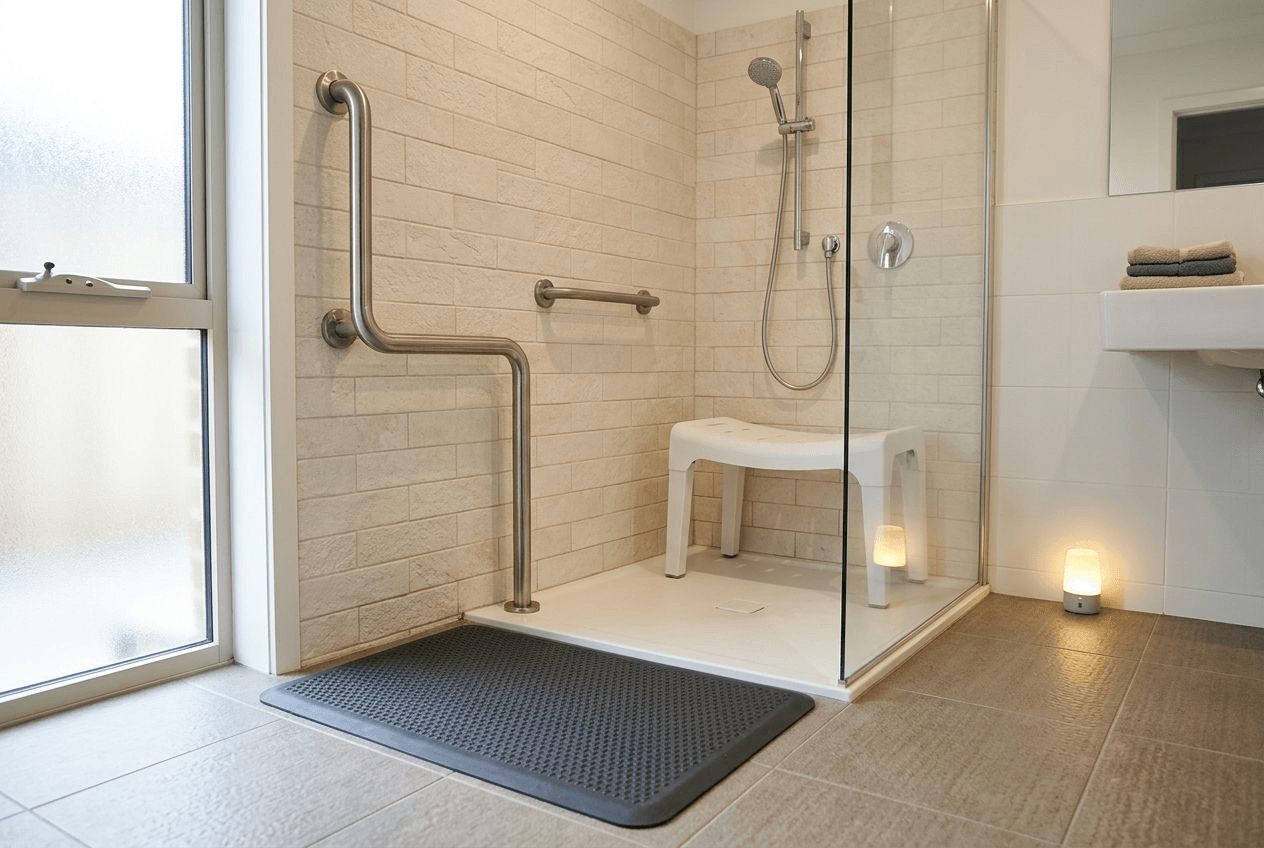
This is the room where a small slip does the most damage. Put grab bars beside the toilet and inside and outside the tub or shower, screwed into studs or solid blocking so they hold real weight. Add non-slip strips or mats to every wet surface, consider a shower chair and a handheld shower head, and leave a night light on. Our bathroom safety guide goes through the room in detail.
Stairs and lighting
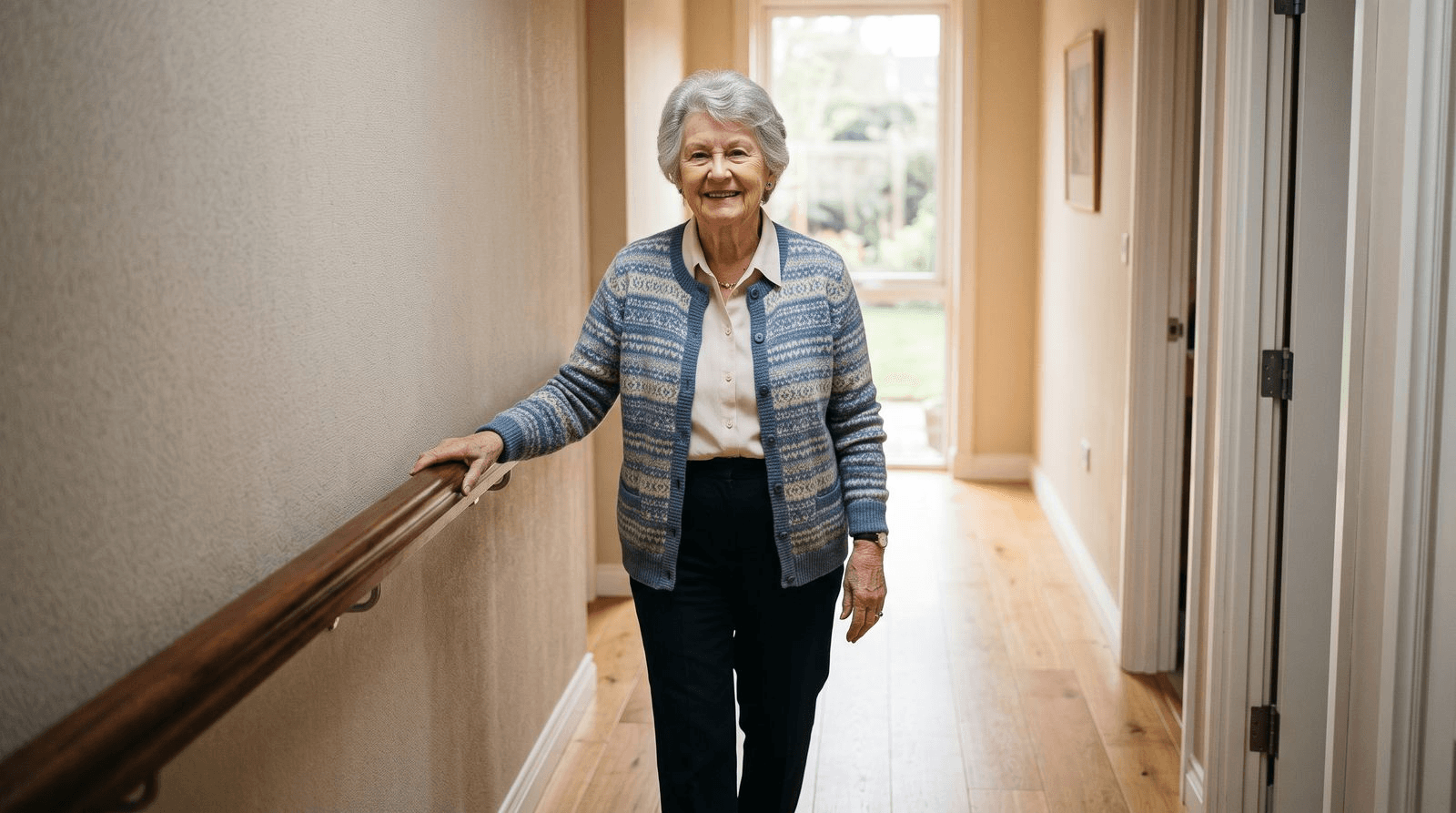
Fit sturdy handrails on both sides of every staircase, and put light switches at the top and bottom. Brighten dim hallways, and add night lights in the bedroom, the hall and the bathroom so nobody finds the way by memory in the dark.
Bedroom and kitchen
Keep a lamp and a charged phone within reach of the bed. In the kitchen, move everyday dishes and pots to between waist and shoulder height so nobody climbs or stretches, and wipe up spills right away. Retire the step stool. A reacher costs far less than a broken wrist.
What the fixes cost
Families often put this off because they picture a renovation. Most of it isn't. The changes that prevent the most falls are the cheapest: non-slip strips for the tub, plug-in or motion-sensor night lights, a raised toilet seat, a shower chair, a handheld shower head, and getting the loose rugs off the floor. That is one trip to the hardware store and an afternoon of work.
Grab bars and better lighting cost more because they need proper installation, and they are worth it. If you aren't sure where to begin, ask the doctor about a home safety evaluation by a physical or occupational therapist. A therapist who watches how your parent actually gets in and out of the tub will spot things a generic checklist misses.
Only structural projects run into the thousands. A ramp should rise no more than one inch for every 12 inches of length, so a few porch steps can need a long ramp. The National Council on Aging estimates a stairlift at about $2,500 to $5,000 installed on a straight staircase and $8,000 to $12,000 on a curved one. Price these when the stairs have become the daily obstacle, and after the cheap fixes are done.
The risks you can't see on the floor
A tidy house is half the job. The other half is in the body, and the biggest hidden risk is often in the pill organizer. Sleep aids, sedatives, some antidepressants and antihistamines, blood pressure pills and water pills can cause drowsiness, dizziness or a drop in pressure, and the risk climbs with each added medication. The Mayo Clinic advises bringing the full list, including over-the-counter drugs and supplements, to the doctor. Never stop a prescription on your own, but do put every bottle on the table.
Three more checks are easy to overlook. Keep eye exams current, and take care in the first weeks with new bifocals, which can make steps look closer or farther than they are. Watch for low blood pressure on standing, which can drop someone before they take a full step. And look at the feet: floppy slippers and stocking feet cause a lot of falls, while firm, non-slip shoes that fasten give a person something to trust.
Strength and balance work improves the person
Home fixes are the quickest win. Exercise is the most powerful one, because it is the only step that changes the person rather than the house. Weak legs and poor balance sit under most falls, and both respond to training at any age. Programs built on leg strength and balance, and practices such as tai chi, are among the best-proven ways to cut falls.
A doctor or physical therapist can suggest the right starting level, and simple balance exercises can be done holding the kitchen counter. The goal is ordinary: rising from a chair without rocking, standing on one leg long enough to pull on a sock, catching yourself when you trip. That margin, built a few minutes a day, is what turns a stumble into a recovery.
What to do in the first minutes after a fall
Talk this through as a family before you need it, because the instinct to pull someone straight up is usually wrong. If you find a parent on the floor, stay calm and check for serious injury: a blow to the head, severe pain, a hip or leg that looks wrong, or a limb they can't move. If you see any of those, or they can't get up, call 911 and keep them still and warm.
If there is no sign of serious injury and they feel able:
- Have them roll onto one side and rest for a moment.
- Help them onto their hands and knees.
- Let them crawl to a sturdy chair.
- Have them use the chair to rise slowly into a seat.
Then call the doctor, even if all seems well. A hairline fracture, a slow bleed in the head or a cause such as a blood pressure drop can show itself hours later.
Help that reaches someone who lives alone
For a parent who lives alone, the time on the floor before help arrives does much of the lasting harm. A medical alert system, a pendant or wristband that connects to a monitoring center, closes that gap. Look for one that can be worn in the shower, since that is where many falls happen, with automatic fall detection for a fall that leaves someone unable to press a button. Add GPS if they still walk to the mailbox or the store, and light or vibration alerts if their hearing is poor.
Keep an emergency contact list and a page of medications, allergies and conditions on the refrigerator, the same details the American Red Cross recommends every older adult's emergency plan include. A lockbox with a spare key lets responders get in without breaking the door.
Smoke and carbon monoxide alarms belong on the same walk-through. Put smoke alarms on every level and in and outside sleeping areas, test them monthly, and change batteries as the maker directs. Don't let your parent climb on a chair to reach one. That job is for a visiting family member or a caregiver.
The fear that sets up the next fall
After a fall, or even a close call, many older adults start moving less. They skip the walk, cling to furniture, stay in. It feels safe, but less movement means weaker legs and worse balance, which is exactly how the next fall starts. Fear of falling is a risk factor in its own right.
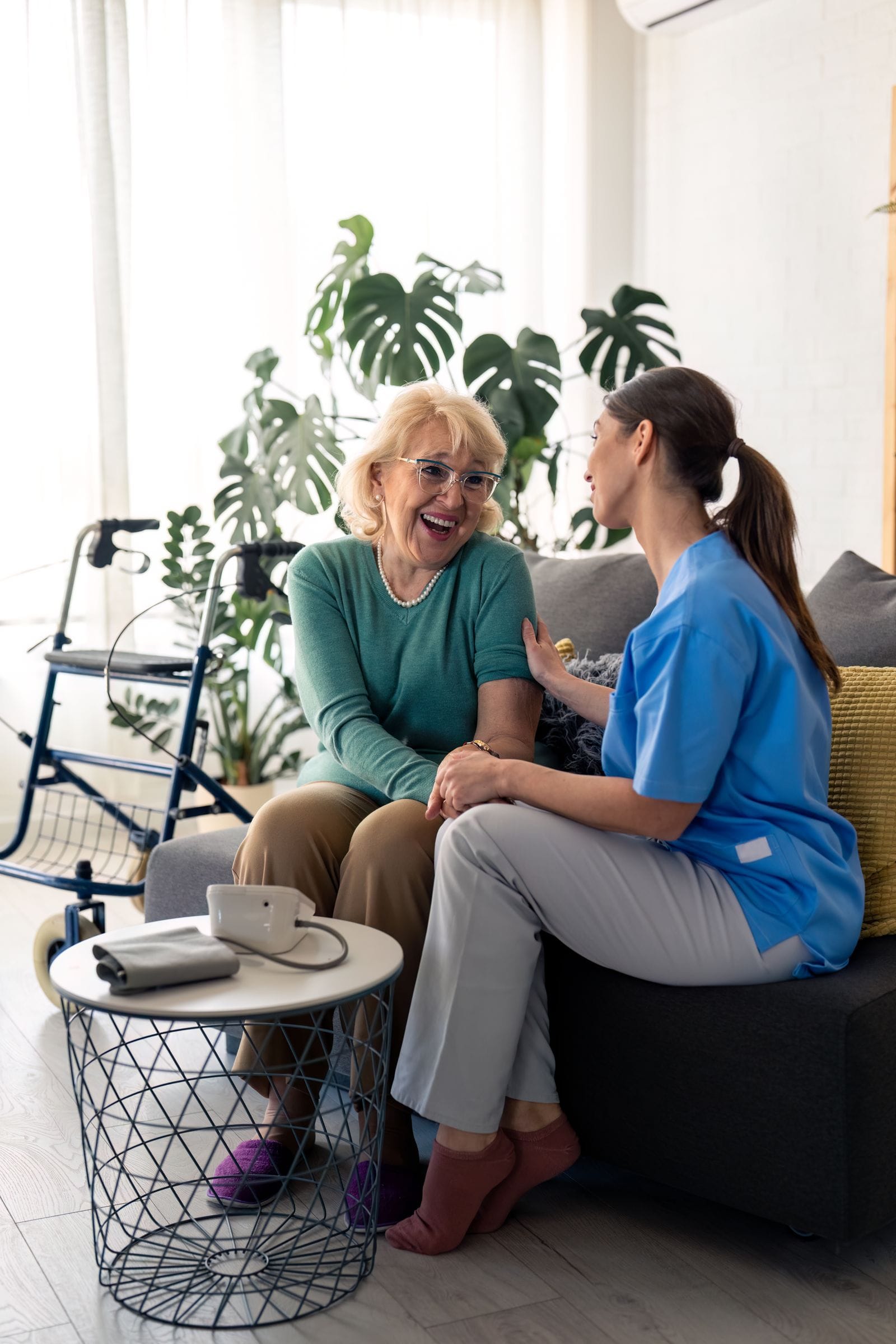
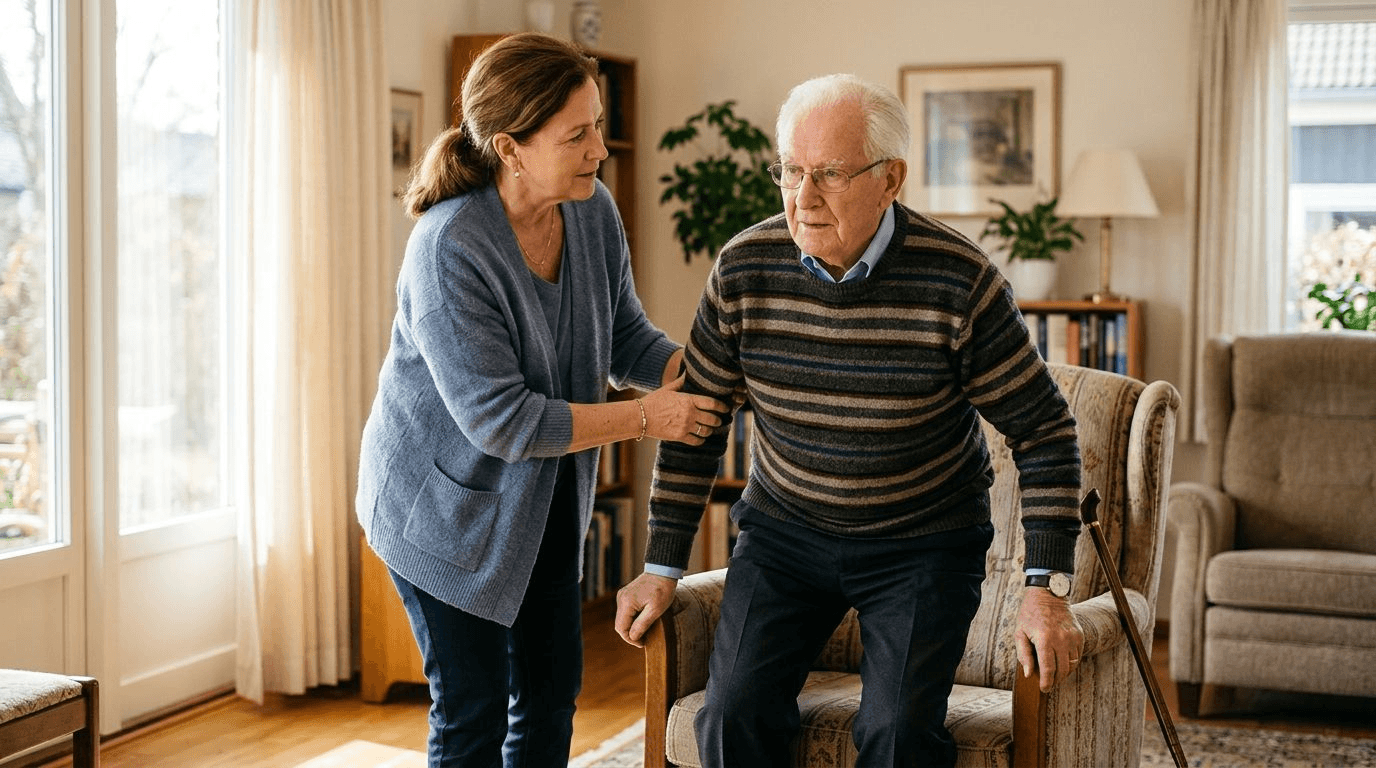
This is often where a steady pair of hands helps most. A caregiver helping with bathing, dressing and getting around the house makes the risky moments safer, the shower, the stairs, the trip to the bathroom at night, and gives a nervous parent the confidence to keep moving. Our mobility care centers on safe transfers and walking. A caregiver is also often the first to notice a new unsteadiness, a rug that has crept back into the hall, or a medicine that leaves your parent woozy. That everyday presence is most of what our caregivers in Ocean County and our other service areas do.
Start with one room this week
A full list can make it easy to do nothing, so don't try to do it all at once. This week, take the loose mat out of the bathroom, plug in a night light and get a quote for grab bars. Book the eye exam. Put every pill bottle in a bag for the next doctor's visit. Start five minutes of balance work at the kitchen counter each morning.
None of these steps is dramatic, and together they let a person keep the run of their own home. If you'd like a second set of eyes on a parent's house or daily routine, get in touch and we'll talk through where to start.
Common questions
Click or tap a question to see the answer.
How can you prevent falls at home for the elderly?
Work on three fronts at once. Fix the home: remove throw rugs, clear walkways, add grab bars in the bathroom and railings on both sides of stairs, and light the path from the bed to the bathroom. Strengthen the body: do regular strength and balance exercise such as tai chi, keep eye exams current, and wear supportive, non-slip shoes. Review medications with a doctor or pharmacist, since sleep aids, sedatives, blood pressure pills and several other drugs raise fall risk. No single step carries the whole load, but together they lower the odds substantially, and most cost little.
What is the most common cause of falls in the elderly?
There is rarely a single cause. The CDC notes that most falls come from a combination of risk factors, and the more a person has, the more likely they are to fall. Common ones are weak legs and poor balance, vision problems, blood pressure that drops on standing, medications that cause drowsiness or dizziness, foot pain or poor footwear, and home hazards such as loose rugs, clutter and dim stairs. Weakness and balance problems are the most frequent thread, which is why strength and balance exercise is one of the best-proven ways to prevent falls.
What should you do immediately after an elderly person falls?
Don't rush to lift them. Stay calm and check for serious injury: a blow to the head, severe pain, a hip or leg that looks out of place, or trouble moving a limb. If you see any of those, or the person can't get up, call 911 and keep them still and warm. If there is no sign of serious injury and they feel able, help them up in stages: roll onto one side, rest, come up onto hands and knees, crawl to a sturdy chair and use it to rise into a seat. Call their doctor even if they seem fine, because a hidden fracture, a slow head bleed or a cause such as a blood pressure drop can show up later.
How often should older adults be screened for fall risk?
The CDC's STEADI program recommends screening adults 65 and older for fall risk every year, and sooner after a fall. A basic screen asks three questions: Have you fallen in the past year? Do you feel unsteady when standing or walking? Do you worry about falling? A yes to any of them is worth raising with the doctor, who can check strength, gait and balance, review medications, and look at blood pressure, vision and feet.
Do grab bars and home modifications really prevent falls?
Yes, especially in the bathroom, where wet, hard surfaces turn a slip into an injury. Grab bars beside the toilet and in the tub or shower, non-slip mats, a shower seat, brighter lighting, night lights and clear walkways all lower risk, and they work best alongside strength and balance exercise. Grab bars must be screwed into wall studs or solid blocking to hold a person's weight; suction-cup bars and towel racks are not safe to lean on. A physical or occupational therapist can visit the home and point out the changes that matter most for one person.
How much does it cost to make a home safer for an older adult?
Less than most families expect, because the fixes that prevent the most falls are cheap: non-slip strips for the tub, plug-in night lights, a raised toilet seat, a shower chair, a handheld shower head and taping down or removing loose rugs. Properly anchored grab bars and better lighting cost more because they need installation. Structural changes cost the most. The National Council on Aging puts a straight-staircase stairlift at about $2,500 to $5,000 installed and a curved one at about $8,000 to $12,000. Do the inexpensive fixes first.
What should someone who lives alone have in place in case of a fall?
A way to call for help that doesn't depend on reaching a phone. A medical alert system with a pendant or wristband connects the person to a monitoring center; choose one that can be worn in the shower and offers automatic fall detection, plus GPS if they still walk outside. Keep an emergency contact list and a page listing medications, allergies and conditions on the refrigerator, and consider a lockbox with a spare key so responders can get in without forcing the door. Working smoke and carbon monoxide alarms, tested monthly, belong on the same list.