Which Kind of Meal Delivery Is Right for Your Parent?
Meal delivery for seniors: how community programs, medically tailored meals, and meal kits differ, and how to judge any of them for an older adult.

You can usually see it in the refrigerator before anyone says a word. The same three things on rotation. A carton of milk a week past its date. Leftovers from a meal a neighbor dropped off, untouched. For a lot of families, the first real sign that an aging parent is struggling at home is not a fall or a diagnosis. It is the quiet slide out of cooking, and the weight loss that follows.
Meal delivery is one of the simplest, highest-return fixes for that problem, and there has never been more of it to choose from. But the options are not interchangeable, and families waste real money and time picking the wrong kind. A free community program and a fourteen-dollar-a-meal subscription solve different problems for different people. This guide sorts the landscape into four categories, shows you how to judge any of them for an older adult, and names the one question that changes the answer entirely.
Start by Naming the Real Problem
Before you compare anything, get clear on what you are actually trying to fix, because it points to a different solution than most people expect. Sometimes the problem is access: your parent cannot get to a store, cannot stand long enough to cook, or lives somewhere without easy grocery delivery. Sometimes it is medical: a new diabetes or kidney diagnosis means meals have to hit specific targets, and freezer-aisle convenience food will not do.
And sometimes, honestly, the food arriving is not the hard part at all. Plenty of older adults have a full freezer of delivered meals and are still losing weight, because no one is there to reheat them, notice the appetite is gone, or simply keep them company at the table. Naming which of these three you are dealing with, access, diet, or the act of eating itself, tells you whether you need a program, a subscription, or a person. Often it is more than one.
Two Very Different Kinds of Meal Delivery
Almost everything on the market falls into one of two buckets, and confusing them is where families go wrong.
The first is the community meal program, funded with public money to keep older adults nourished and out of institutions. Meals on Wheels is the name most people know, but it is really one part of a federal system. These programs are inexpensive or free, prioritize people with real need, and come with a human at the door. The trade-off is limited menu choice and, in some areas, a waiting list.
The second is the paid meal service, a business that ships food to anyone willing to buy it. You get menu variety, tighter control over medical diets, and reliable delivery, but you pay retail unless an insurance plan happens to cover it. Understanding the two buckets is most of the battle. The rest is matching one to your parent.
Meals on Wheels and the Program Behind It
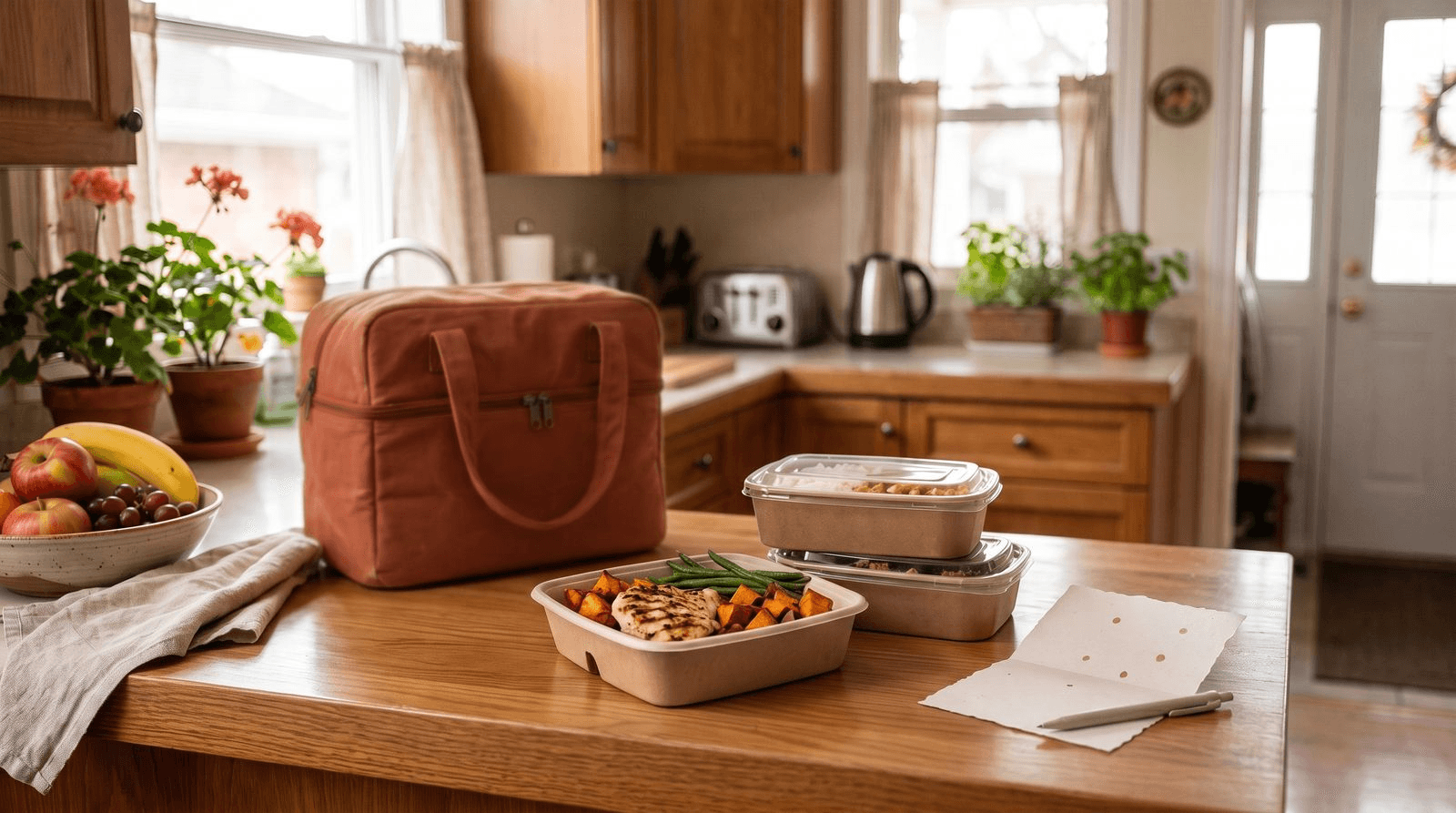
Most people picture a single charity when they hear Meals on Wheels. In reality, it is a network of more than five thousand local programs, many of them funded through the Older Americans Act Nutrition Program, a federal effort that has delivered meals to homebound older adults since the 1970s. Together, these programs serve roughly nine hundred thousand meals a day. Each home-delivered meal is held to federal nutrition standards and is required to provide at least a third of the recommended daily nutrients, so the food is designed to be genuinely nourishing, not just filling.
Eligibility is broader than families assume. In general, the home-delivered program serves adults age 60 and older who are frail, homebound, or isolated, with priority going to those in the greatest social or economic need. It is not strictly income-tested, and the law promises that no eligible person is turned away for inability to pay. Most programs ask for a voluntary donation, often a few dollars, and quietly waive it for anyone who cannot manage it. Just as valuable as the food is the visit: the driver is often the one person who lays eyes on your parent each day and can flag a fall, a fever, or a bad afternoon.
To find the program serving your parent's address, start at the Eldercare Locator, a free public service of the U.S. Administration for Community Living. Enter a ZIP code online or call 1-800-677-1116, and it connects you to the local Area Agency on Aging, the office that handles home-delivered and group meals in that community. In New Jersey, that office is your county's Office on Aging; our county-by-county aging guide lists the direct phone number and website for all 21. One caution worth planning around: because demand outstrips funding in many areas, some programs keep waiting lists even for eligible applicants, so apply sooner rather than later and ask about interim options while you wait.
The Four Categories You Are Actually Choosing Between
Once you set the community programs aside, the paid market is not one thing. It divides into three categories that differ in who they were designed for, and the distinction matters more than any individual provider's menu.
Medically tailored meals are the category built around a diagnosis. Registered dietitians design the menus to condition-specific targets, and the provider labels each line by diet: diabetic, renal or dialysis, heart-healthy, low-sodium, and pureed or mechanical-soft for swallowing trouble. This is also the only paid category that insurance meaningfully touches, because health plans buy it as a clinical intervention rather than a convenience.
Senior-focused prepared meals are ready to reheat and portioned with older adults in mind: softer textures, moderate portions, containers meant to go straight from refrigerator to microwave. They are not engineered to a clinical target, but they assume the person eating them may have a small appetite and limited patience for cooking.
General prepared meals and meal kits are the broad-market services you see advertised everywhere. Prepared versions arrive cooked and only need heating; kits arrive as ingredients and still require real cooking, chopping, and standing at a stove. Both can work well for an older adult who is healthy and simply tired of shopping and planning, but neither was designed for one, so the nutrition labels need reading against your parent's actual needs rather than trusted on the packaging.
| Category | What it is | Best for | Insurance may cover? |
|---|---|---|---|
| Community meal program | Publicly funded local delivery, plus a wellness check at the door | Homebound adults 60 and older, tight budgets, isolation | Publicly funded |
| Medically tailored meals | Dietitian-designed menus built to condition-specific targets | Diabetes, kidney disease, heart failure, swallowing trouble | Sometimes, through Medicare Advantage or a Medicaid waiver |
| Senior-focused prepared meals | Ready-to-reheat meals portioned with older adults in mind | Limited cooking ability, small appetite, wanting variety | Generally no |
| General prepared meals and meal kits | Broad-market services; kits still require cooking | Healthy older adults tired of shopping and planning | Generally no |
How Insurance Coverage Actually Works
This is the part families most often get wrong in the expensive direction, so it is worth being precise. Traditional Medicare, Parts A and B, does not pay for ongoing home-delivered meals. That is not a loophole to argue your way through; it is simply outside the benefit.
Medicare Advantage is different. Many Part C plans offer home-delivered meals as a supplemental benefit, most commonly as a limited run of meals after a hospital discharge, and some plans extend it to members managing specific chronic conditions. It varies plan by plan and state by state, which means the only trustworthy answer comes from calling the plan and asking two questions: is meal delivery a covered benefit, and what makes a member eligible for it.
Medicaid is the other door. Many states cover home-delivered meals for qualifying members through a home and community-based services waiver, the same category of program that funds other in-home supports. Eligibility and scope are set state by state, so the local Area Agency on Aging is usually the fastest way to find out what your parent's state actually offers. Make both calls before you start paying retail, because the difference between a covered benefit and an out-of-pocket subscription is the entire cost.
How to Judge Any of Them for an Older Adult
Once you know the category, the evaluation is the same regardless of who provides the food. A little diligence here prevents a freezer full of meals your parent will not touch.
- Texture and chewability. Dentures, a dry mouth from medication, or any difficulty swallowing changes what is edible. Ask whether pureed or mechanical-soft options exist, and loop in your parent's doctor or a speech therapist if swallowing is the concern.
- Sodium and the other numbers. Get the specific targets from your parent's doctor or dietitian, then check them against the published nutrition panel, meal by meal. Prepared food runs high in sodium by default, and a reassuring label is not a measurement.
- Portion size. A portion sized for a working adult can be discouraging in front of someone with a small appetite, and a half-eaten meal is the start of unintentional weight loss. Smaller and more frequent usually beats large and abandoned.
- Packaging your parent can open. This one is invisible until it is not. Peel-back film, tight lids, and shrink wrap defeat hand arthritis, weak grip, and tremor. If your parent cannot open the container without help, the meal does not exist.
- Delivery that does not end on the doorstep. Ask what actually happens at the door. A box of refrigerated food left outside for six hours is a food-safety problem, and a heavy carton is unmovable for someone who uses a walker. Find out whether the driver hands it over, and who brings it inside if nobody answers.
- Storage. Is there fridge and freezer room for a full delivery, and does your parent track use-by dates reliably?
- Cost and commitment. Is it a subscription or a la carte, and how easy is it to pause, skip, or cancel when circumstances change?
- Taste. Order a small first shipment before locking in a big plan, because a meal only helps if your parent will actually eat it.
Which Category Fits Your Parent's Situation
Rather than rank providers, match the category to the situation you actually have. A few common ones:
Tight budget and truly homebound. Start with Meals on Wheels through the Eldercare Locator. The price is right, the food meets federal nutrition standards, and the daily visit is a safety net no subscription box offers. A new medical diet. If a doctor has prescribed a diabetic, low-sodium, or renal plan, go straight to the medically tailored category, and call the insurance plan first, because this is the one category a plan might pay for. Chewing or swallowing trouble. Look specifically for pureed or mechanical-soft menus, and get texture guidance from your parent's doctor or a speech therapist before you order. Just tired of cooking. If your parent is otherwise healthy and simply over the daily grind of shopping and prep, a senior-focused prepared service or a light meal kit keeps mealtime interesting without a medical framing. And if the real issue is eating alone, see the next section, because more food may not be the fix.

The Meal Shows Up. Someone Still Has to Eat It.
Here is the limit of every option on this page. A box on the porch does not bring itself inside, warm itself up, or notice that the last three meals are still sealed in the fridge. For an older adult with memory changes, low appetite, or the deep flatness of eating every meal alone, delivery solves the logistics and leaves the human part untouched. Weight can keep dropping even as the meals pile up.
That gap is exactly where an in-home caregiver earns their keep. A companion caregiver turns a delivered meal into an actual meal: reheating it, setting the table, sitting down to eat alongside your parent so the moment has some company in it, and quietly tracking whether the appetite is holding. Caregivers providing homemaker services can also handle the grocery runs, the light cooking a delivery service does not cover, and the dishes afterward. If you would rather have a familiar face cook from scratch than manage a subscription at all, that is on the table too. For families we serve around Monmouth County, New Jersey, the meal program and the caregiver often work best as a pair, one keeping the food coming, the other making sure it does its job.
Bottom Line, by What Matters Most
If you strip the choice down to the single thing that matters most for your parent, it resolves quickly. When cost is the constraint, call the Eldercare Locator and get on the list for Meals on Wheels. When a medical diet drives everything, go to the medically tailored category and check insurance before you pay. When your parent is healthy but done with cooking, a senior-focused prepared service or a meal kit keeps things simple. And when the real issue is that meals are being missed rather than being made, the answer is not another delivery, it is a person at the table. Pick for the problem in front of you, order a small trial first, and adjust once you see what your parent actually eats.
Frequently Asked Questions
What kind of meal delivery is best for seniors?
There is no single best option, because the right one depends on why your parent needs it. If cost and social contact matter most, a local Meals on Wheels program is hard to beat, since it is free or donation-based and includes a check-in at the door. If your parent manages diabetes, kidney disease, heart failure, or swallowing trouble, look at the medically tailored category, where dietitians build menus to specific sodium, carbohydrate, potassium, and texture targets, and which some insurance plans cover. If your parent is healthy and simply tired of cooking, a general prepared-meal service or a light meal kit is enough. Match the category to the need rather than chasing a ranking.
Does Medicare pay for meal delivery for seniors?
Traditional Medicare, Parts A and B, does not pay for ongoing meal delivery. Some Medicare Advantage plans, also called Part C, do cover home-delivered meals as a supplemental benefit, often for a limited window after a hospital stay or for members managing certain chronic conditions. Coverage varies by plan and by state, so the only reliable answer is to call the plan directly and ask whether meal delivery is a covered benefit and what the eligibility rules are. Many state Medicaid programs also cover meals for qualifying members, frequently through a home and community-based services waiver. Check both before assuming your parent has to pay the full price out of pocket.
How much does senior meal delivery cost?
Community programs like Meals on Wheels are free or ask for a small suggested donation, and no eligible older adult is turned away for inability to pay. Private prepared-meal services generally run from about seven to fourteen dollars per meal, plus shipping in some cases. Ordering one dinner a day works out to roughly two hundred to four hundred dollars a month. If your parent qualifies for meal coverage through a Medicare Advantage plan or a Medicaid waiver, the out-of-pocket cost can drop to nothing, so it is always worth checking insurance eligibility before paying full price.
Are there free meal delivery services for seniors?
Yes. The Older Americans Act funds a nationwide Home-Delivered Nutrition Program, delivered by Meals on Wheels and thousands of local partners, that provides free or low-cost meals to adults age 60 and older who are frail, homebound, or isolated. Each meal must meet federal nutrition standards and provide at least a third of the recommended daily nutrients. The program serves roughly nine hundred thousand meals a day. To find the program in your parent's area, contact the local Area Agency on Aging through the Eldercare Locator at 1-800-677-1116 or eldercare.acl.gov. Be aware that some communities keep waiting lists, so it is worth applying early.
What meal delivery works for a diabetic or low-sodium diet?
Look for the medically tailored category rather than a general meal service. These providers have dietitians build menus to condition-specific targets and label them by diet, so you can filter to diabetic, heart-healthy, low-sodium, renal, or pureed. Before ordering, get the specific numbers from your parent's doctor or registered dietitian: the daily sodium ceiling, the carbohydrate target per meal, and the potassium limit if the kidneys are involved. Then check those numbers against the nutrition panel the provider publishes. A menu labeled heart-healthy is not automatically inside the sodium limit a cardiologist set, so confirm rather than assume.